
Procurement guides
How Much Does an Ambulance Cost in Africa? Spec Guide
25 November 2026
The landed budget for a new ambulance imported into Africa depends on five technical and logistical variables: base chassis selection, drivetrain (4x2 van vs. 4x4 off-road), medical cabin tier (Patient Transport, BLS, or ICU), steering orientation (LHD for West Africa vs. RHD for East and Southern Africa), and ocean freight plus destination customs clearance. Because fuel standards, road surfaces, and statutory pre-shipment inspection rules vary sharply across African sub-regions, procurement teams achieve more predictable budgets by locking down tropical climate and drivetrain specifications before requesting formal FOB or CIF quotations.
Procurement Resources & Bid Support
* Primary Action: Request Africa Ambulance Spec & Budget Matrix — Get the LHD/RHD Configuration Sheet & Medical BoQ
* Secondary Action: Request Bid Quotation — Submit your tender schedule for an itemized FOB or CIF estimate
Budget Breakdown by Ambulance Level (Transport, 4x4, BLS, ICU)
Ministries of Health, state governments, and county referral hospitals across Africa rarely purchase a single uniform ambulance configuration. Instead, budgets are segmented across four operational tiers. Rather than relying on outdated generic online figures, procurement planners should evaluate relative capital tiers alongside the exact chassis, electrical, and medical hardware driving unit pricing. (Exact FOB USD ranges are issued in writing against confirmed chassis availability and equipment bills of quantities.)
| Ambulance Tier | Relative Budget Index | Common Base Platforms | Cabin & Medical Scope | Primary Cost Drivers | Typical African Deploying Unit | Actions |
|---|---|---|---|---|---|---|
| Tier 1: Patient Transport (Entry Economy) |
1.0x Baseline (Most affordable compliant build) |
4x2 Standard/Mid-Roof Van (e.g., Hiace-class, Transit, Maxus, Jinbei/Foton) | Washable ABS/FRP interior, auto-loading stretcher, 2 x 10 L oxygen, 1,000 W inverter, squad bench | Base van chassis origin, tropical A/C condenser upgrade, basic emergency lightbar | Primary health centers (PHCs), local government clinics, maternal referral hubs | View Models | Get Spec/Quote |
| Tier 2: Basic Life Support (BLS) (Core Municipal) |
1.25x – 1.55x | 4x2 Long-Wheelbase High-Roof Van (1,800+ mm headroom) | 2 x 20 L oxygen with dual outlets, 1,500–2,000 W pure sine inverter, spine board, scoop stretcher, suction, AED mount | High-roof structural conversion, reinforced dual-battery electrical loom, full trauma immobilization kit | State EMS agencies, county/district hospitals, highway emergency response units | View Models | Get Spec/Quote |
| Tier 3: 4x4 Off-Road Rural (All-Terrain) |
1.6x – 2.2x | 4x4 Hardtop or Pickup + Modular Box (Land Cruiser 78/79, Hilux, Isuzu D-Max, 4x4 Light Truck) | BLS or ICU fit-out inside dust-sealed hardtop or insulated aluminum composite box; heavy-duty suspension | 4x4 chassis scarcity (especially RHD), modular box fabrication, snorkel, dual fuel tanks, recovery winch | Rural county clinics, northern/arid zone health bureaus, UN & NGO humanitarian fleets | View Models | Get Spec/Quote |
| Tier 4: ICU / Advanced Life Support (Critical Care) |
2.0x – 2.8x+ | Super-High-Roof Van (Sprinter/Transit/Iveco class) or Heavy Modular Box | 2 x 40 L oxygen manifold, 3,000 W inverter + shore power, transport ventilator, multiparameter monitor, defibrillator, syringe pumps | Branded medical devices (often 35%–45% of total unit cost), high-output alternator, negative-pressure option | Federal medical centers, teaching hospitals, regional referral trauma centers | View Models | Get Spec/Quote |
Two procurement realities frequently distort initial African ambulance budget estimates:
- Medical Device Brand Specification: On a Tier 1 or Tier 2 build, the vehicle chassis and cabin conversion represent 75% to 85% of the FOB price. On a Tier 4 ICU unit, however, specifying European or North American branded ventilators, biphasic defibrillators, and infusion pumps can equal or exceed the cost of the medical conversion itself. Separating the Vehicle & Conversion BoQ from the Loose Medical Equipment BoQ allows tender evaluators to benchmark pricing transparently.
- Engine Fuel Type (Diesel vs. Gasoline/Petrol): In markets such as Nigeria and Ghana, petrol/gasoline van platforms often carry a lower upfront purchase price and simpler servicing at local workshops for urban short-haul transfers, whereas turbo-diesel engines command a modest upfront premium but deliver significantly better fuel autonomy and torque for heavy high-roof BLS/ICU conversions and 4x4 rural deployments.
Specifying for Local Fuel Quality, High Heat & Unpaved Roads
An ambulance engineered strictly for temperate European highways will experience rapid injector clogging, cooling failure, and cabinet fatigue within 12 months of deployment in Sub-Saharan Africa. To protect public fleet uptime—and directly address common buyer concerns in markets like Nigeria, Kenya, and Tanzania—tender specifications should mandate four tropicalization clauses:
- Fuel Filtration & Emission Matching: High-sulfur diesel and water contamination in remote fuel depots quickly damage sensitive Euro V/VI Diesel Particulate Filters (DPF) and Selective Catalytic Reduction (SCR) sensors. Unless national import regulations strictly mandate higher tiers, African public tenders should specify Euro II, Euro III, or tropicalized Euro IV engines paired with a heavy-duty primary fuel-water separator (30-micron or 10-micron replaceable element with transparent drain bowl) and corrosion-resistant fuel lines.
- High-Ambient Tropical Cooling & Dual Air Conditioning: Cabin temperatures inside a parked ambulance in Sahelian or coastal heat easily surpass 50°C, degrading heat-sensitive IV fluids, medications, and battery life. Specifications should require a heavy-duty tropical radiator, viscous cooling fan, high-density polyurethane foam cabin insulation (minimum 30–50 mm thickness), and independent rear medical compartment air conditioning rated at 6,000–8,000 W cooling capacity driven by a dedicated dual-compressor setup.
- Dust Sealing & Washable Surfaces: During dry Harmattan winds in West Africa or red-laterite dust travel in East Africa, fine particulates infiltrate poorly sealed rear doors and electrical relays. Specify automotive-grade EPDM double-lip door gaskets, IP65-rated sealed switches, seamless one-piece non-slip vinyl flooring with coved wall edges, and recessed medical cabinet latches that stay shut over corrugated roads.
- Suspension & Undercarriage Protection: Standard commercial van leaf springs sag prematurely under the constant deadweight of oxygen cylinders, battery banks, cabinets, and stretchers. Require reinforced heavy-duty rear leaf springs or upgraded coil-over shock absorbers, steel engine/sump skid plates, and full-size spare wheels mounted for rapid roadside access.
Featured Fleet Configurations for African Health Tenders
Explore representative configurations from our ambulances lineup engineered for urban corridors, highway trauma, and unpaved rural districts.
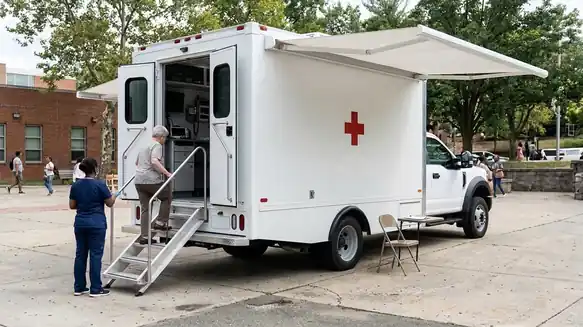
Economy Patient Transport Van (LHD / RHD)
|
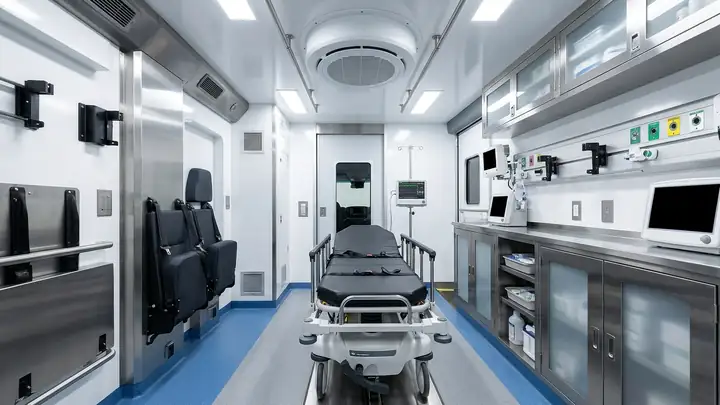
Tropicalized High-Roof BLS Ambulance
|
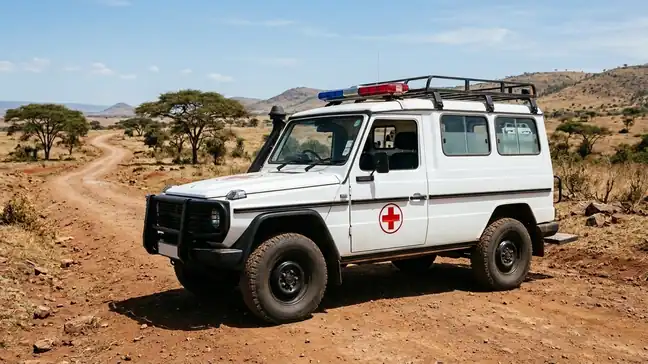
4x4 Off-Road Rural Ambulance (Hardtop / Box)
|
ICU / ALS Referral Hospital Ambulance
|
LHD (Nigeria/Ghana) vs RHD (Kenya/Tanzania/Zambia/Zimbabwe) Lead Time
Steering configuration is a non-negotiable statutory import requirement across African customs regimes and directly affects production scheduling and chassis selection:
- Left-Hand Drive (LHD) Corridors — Nigeria, Ghana, Francophone West & Central Africa: LHD base vans and 4x4 chassis are produced in higher standard export volumes. Typical build lead times from deposit and layout drawing approval run 30 to 50 days for Patient Transport and BLS builds, and 45 to 65 days for ICU or custom 4x4 modular box builds. For detailed country import considerations, review our Nigeria public fleet procurement page.
- Right-Hand Drive (RHD) Corridors — Kenya, Tanzania, Zambia, Zimbabwe, Uganda & Southern Africa: RHD vans and heavy-duty 4x4 chassis require scheduled RHD production slots and specific RHD headlamp/dashboard assemblies. Procurement teams should plan for 45 to 75 days of factory production and conversion time (and up to 90 days for large multi-unit 4x4 tenders), plus 25 to 40 days of ocean transit to Mombasa, Dar es Salaam, or Durban/Walvis Bay. Review local RHD requirements on our Kenya vehicle procurement guide.
- Statutory Vehicle Age Limits: Many African states enforce strict maximum age caps on imported vehicles (such as Kenya's 8-year rule from year of first registration, or brand-new-only rules for government health tenders). Procuring brand-new, zero-mileage factory-converted ambulances eliminates age-limit rejection risk and preserves full chassis and medical equipment warranties.
Port Delivery, Export Documents & Spare Parts Packages
A competitive FOB price means little if an ambulance stalls in port storage due to missing conformity certificates or incomplete customs paperwork. Landed delivery budgets must account for ocean freight, statutory pre-shipment conformity inspections, and post-arrival maintenance spares:
- Containerized vs. Ro-Ro Ocean Shipping: Standard-roof Patient Transport vans often fit inside 40-foot High Cube (40' HC) shipping containers (two units per container when roof lightbars are temporarily packed inside), offering weather protection and lower pilferage risk at congested ports. High-roof BLS, ICU, and 4x4 modular box ambulances exceeding 2.58 m height ship via Roll-on/Roll-off (Ro-Ro) vessels into major gateway ports including Apapa/Tin Can Island (Lagos), Tema, Mombasa, and Dar es Salaam.
- Mandatory Export & Pre-Shipment Inspection (PSI) Documents: Formal export shipments include a tender-specific Manufacturer's Authorisation Form (MAF), Commercial Invoice, Packing List, Bill of Lading, Certificate of Origin (CO), and electrical/oxygen pressure test reports. Where mandated by national authorities, pre-shipment conformity inspections are coordinated prior to vessel loading—including SONCAP (Nigeria), KEBS PVoC (Kenya), TBS PVoC (Tanzania), and ZABS (Zambia)—through accredited agencies (SGS, Intertek, Bureau Veritas, or QISJ).
- Standards & Warranty Boundaries: Medical cabin ergonomics, 10G-rated stretcher mounting geometry, and electrical isolation circuits are constructed in alignment with buyer-specified tender clauses referencing EN 1789 or KKK-A-1822F upon request. Where formal third-party type-approval certificates are explicitly required by a tender, certifiable configurations are verified in writing before contract signature.
- Recommended 2-Year Preventive Spares Kit: To prevent units from sitting idle awaiting minor consumables, quotes can bundle a 2-year service kit containing engine oil/fuel/air filters, primary fuel-water separator cartridges, serpentine belts, brake pads, inverter fuses, oxygen pressure regulators, and LED warning light modules.
Compliance & Pricing Note: Last updated November 2026. Customs duties, VAT exemptions for Ministries of Health/NGOs, and port handling tariffs vary by national Finance Act and are confirmed with the consignee's licensed clearing agent.
Frequently Asked Questions
1. How much does an ambulance cost in Nigeria or Kenya?
Total landed cost in Nigeria or Kenya is driven by four choices: chassis platform (4x2 van vs. 4x4 off-road), medical tier (Patient Transport, BLS, or ICU), steering orientation (LHD for Nigeria vs. RHD for Kenya), and whether the consignee qualifies for government/NGO duty waivers. Entry-level 4x2 Patient Transport vans sit at the baseline budget tier, high-roof BLS units sit 25%–55% higher, and 4x4 rural or fully equipped ICU ambulances occupy the upper budget tier.
2. What is the most affordable type of ambulance available for Nigeria?
For primary health centers, local government areas (LGAs), and state clinic networks operating on paved or semi-paved roads in Nigeria, a 4x2 standard- or mid-roof Patient Transport Ambulance (LHD) built on a reliable commercial van chassis with tropicalized A/C, a 10 L oxygen setup, and an auto-loading stretcher is the most cost-effective compliant configuration.
3. Can your ambulances withstand Nigerian fuel quality and tropical climate?
Yes. Ambulances built for West and East African deployment are specified with Euro II/III or tropicalized fuel systems, heavy-duty primary fuel-water separators, reinforced cooling radiators, high-density cabin thermal insulation, independent dual-compressor rear medical A/C, and upgraded rear suspension designed for rough roads and high ambient temperatures.
4. What pre-shipment inspections are required when importing ambulances to Africa?
Depending on destination country rules, shipments undergo pre-shipment conformity verification before vessel departure—such as SONCAP for Nigeria, KEBS PVoC for Kenya, and TBS PVoC for Tanzania—conducted by approved agencies like SGS, Intertek, or Bureau Veritas alongside standard export certificates.
5. Do you ship ambulances in containers or by Ro-Ro vessel to African ports?
Standard-roof Patient Transport vans can typically be loaded inside 40' High Cube containers (with roof beacons safely packed inside for re-mounting on arrival), while high-roof BLS, ICU, and 4x4 box ambulances ship via Ro-Ro vessels to Lagos, Tema, Mombasa, Dar es Salaam, and other regional ports.
Download Africa Ambulance Spec Sheet or Request FOB/CIF Quotation
Request Tender Technical Schedule & Bid Support
Share your target vehicle capacity, steering side (LHD/RHD), destination port and tender timeline to receive model technical schedules, dimensional drawings and clause-by-clause bid support.
Request Bid Quotation & Technical Schedule | Review Tender Documents We Provide
Vehicle models to compare
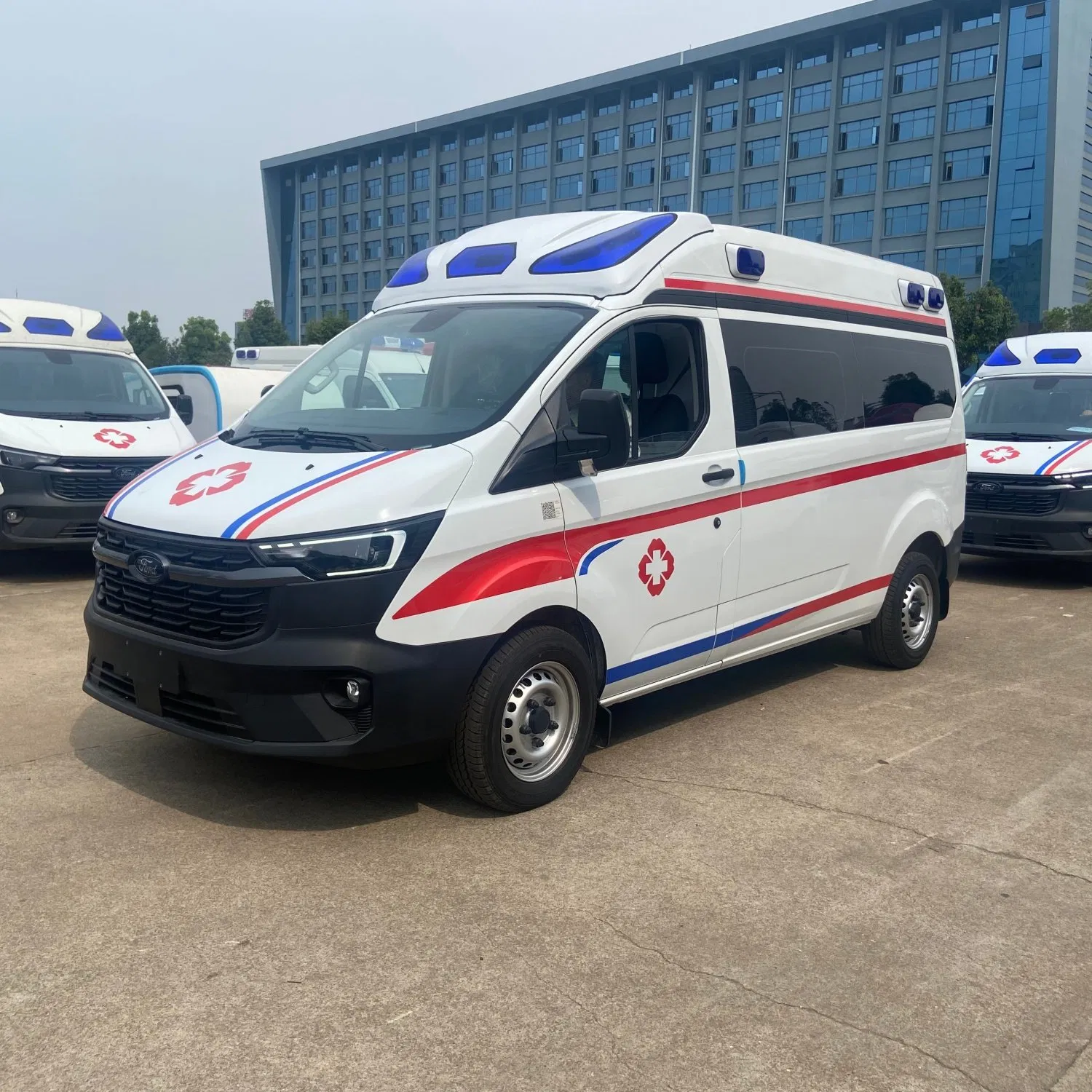
Patient Transport Ambulance CLW5030XJHCDP
The CLW5030XJHCDP is a patient transport ambulance built by Chengli Automobile Group for ministries of health, public hospitals and humanitarian NGOs. Its manufacturer record lists a 3,300 kg GVW class and 162 kW engine output. Right-hand-drive availability, final equipment fit-out and export documentation are confirmed per contract for government and donor-funded tenders.
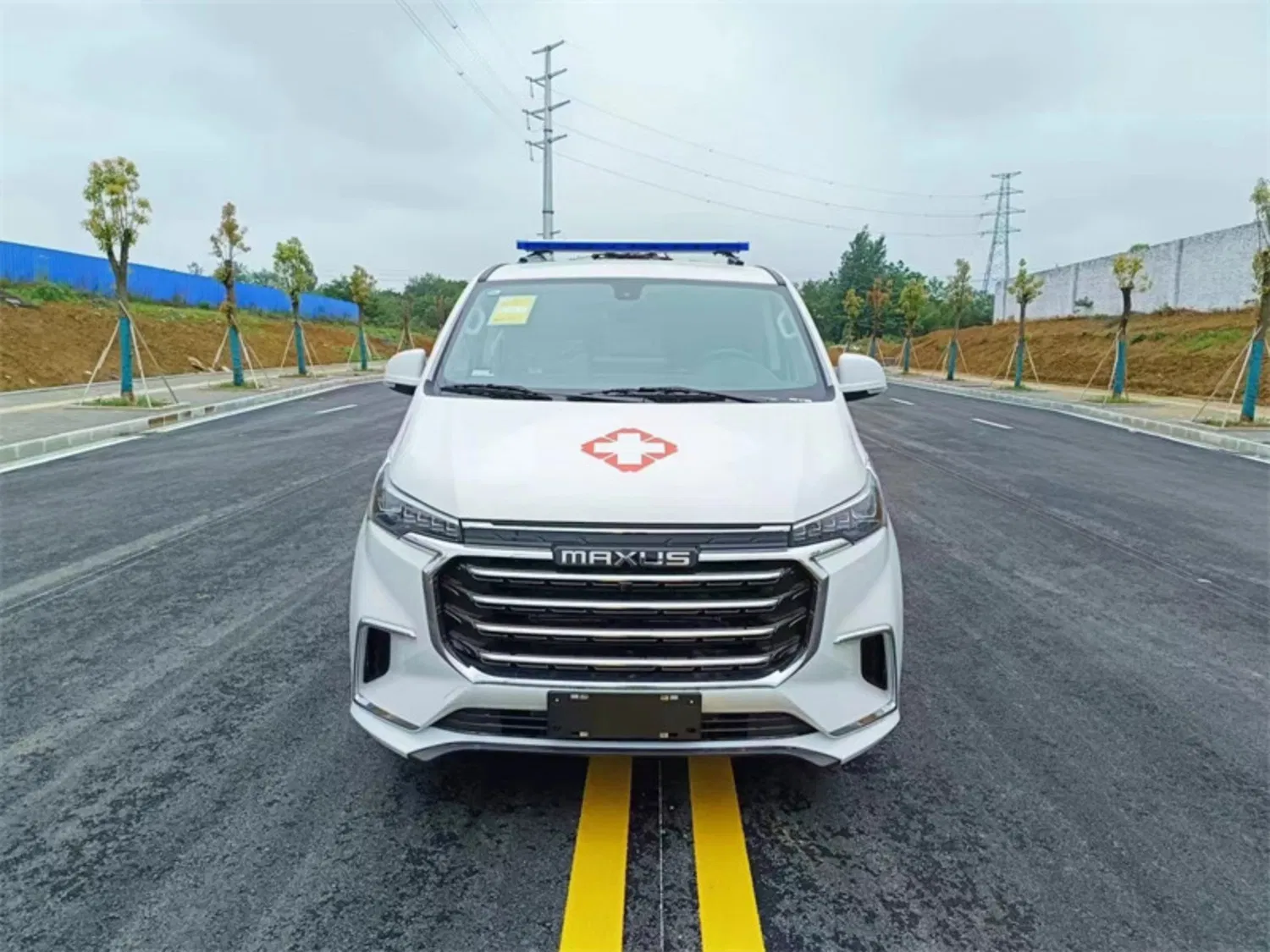
Patient Transport Ambulance CL5030XJH6AYS
The CL5030XJH6AYS is a 4x2 patient transport ambulance built by Chengli Automobile Group for ministries of health, public hospitals and humanitarian NGOs. Its manufacturer record lists a 2,900 kg GVW class and 186.4 kW engine output. Right-hand-drive availability, final equipment fit-out and export documentation are confirmed per contract for government and donor-funded tenders.
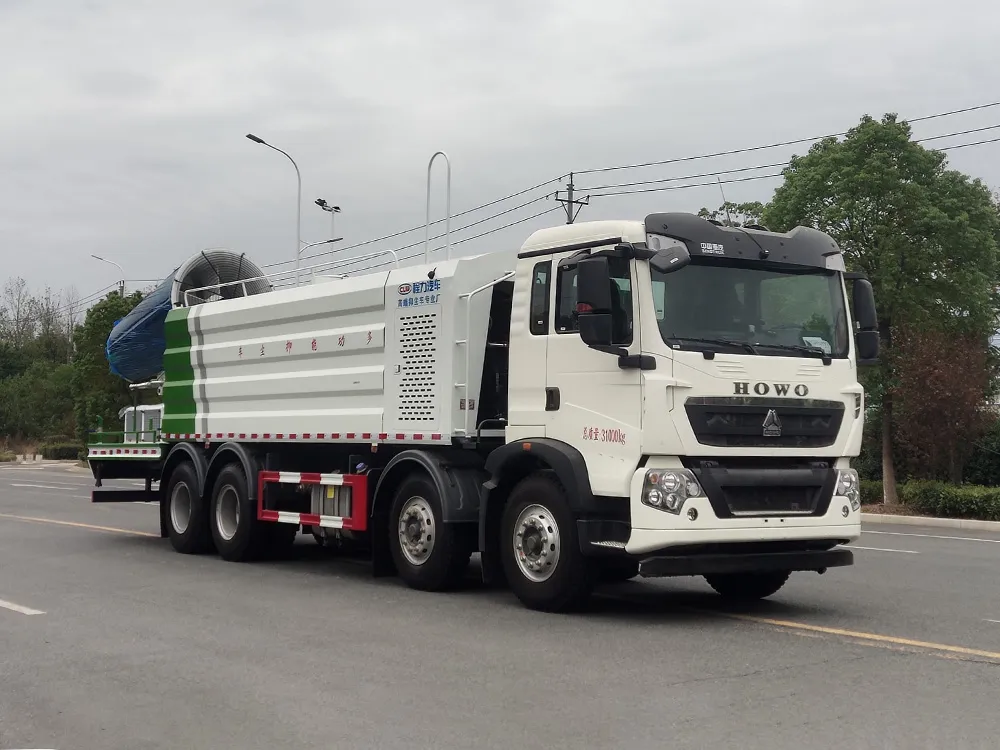
Dust Suppression Truck CL5310TDYZ6YC
The CL5310TDYZ6YC is a 8x4 Sinotruk-chassis dust suppression truck built by Chengli Automobile Group for city councils, municipal sanitation departments and public-works contractors. Its manufacturer record lists a 21 m³ key specification, a 31,000 kg GVW class and 257 kW engine output. Right-hand-drive availability, final equipment fit-out and export documentation are confirmed per contract for government and donor-funded tenders.
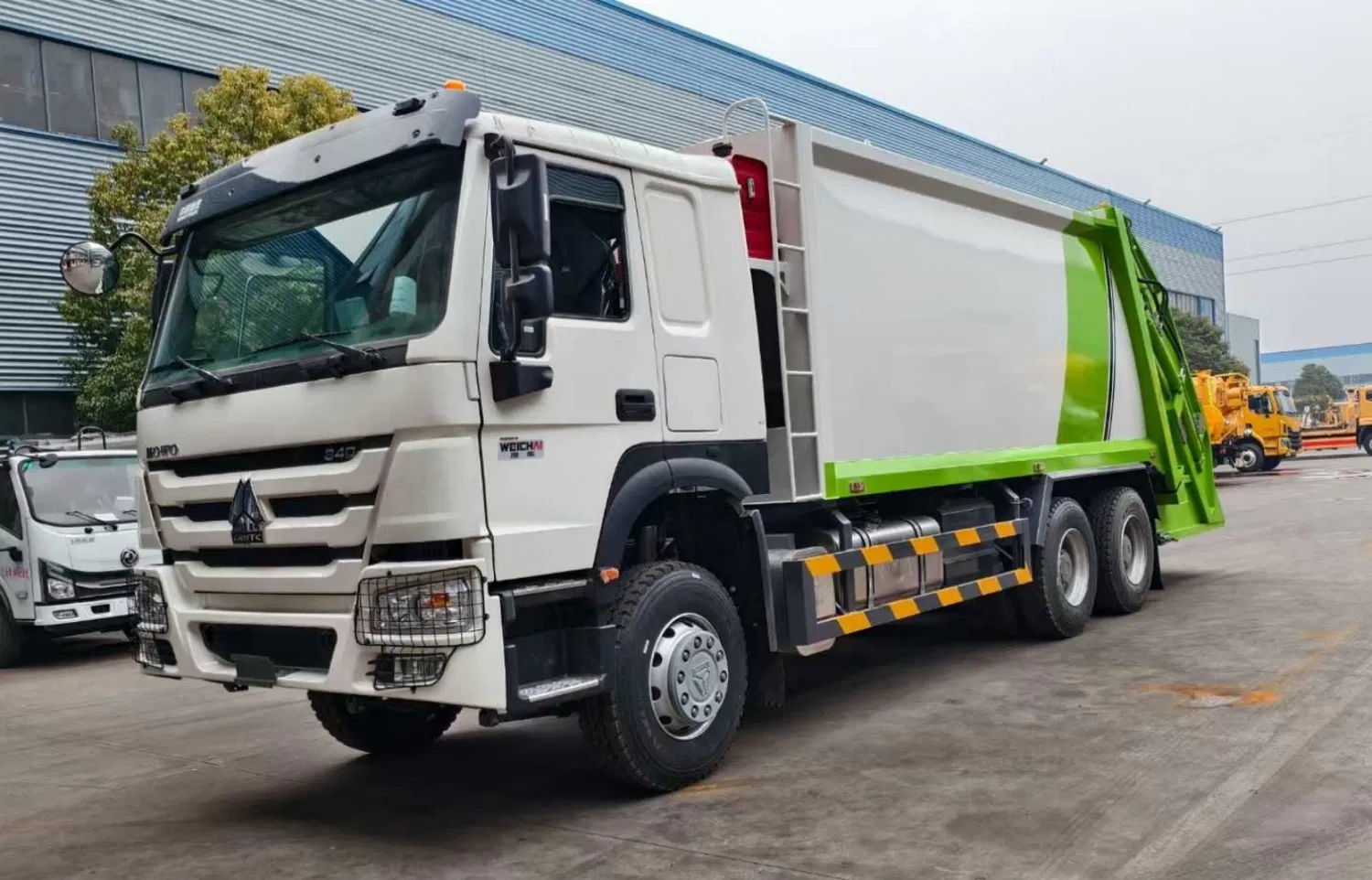
Refuse Compactor CLW5250ZYSAHJ
The CLW5250ZYSAHJ is a 6x4 refuse compactor built by Chengli Automobile Group for city councils, municipal sanitation departments and public-works contractors. Its manufacturer record lists a 20–23 m³ key specification and a 25,000 kg GVW class. Right-hand-drive availability, final equipment fit-out and export documentation are confirmed per contract for government and donor-funded tenders.
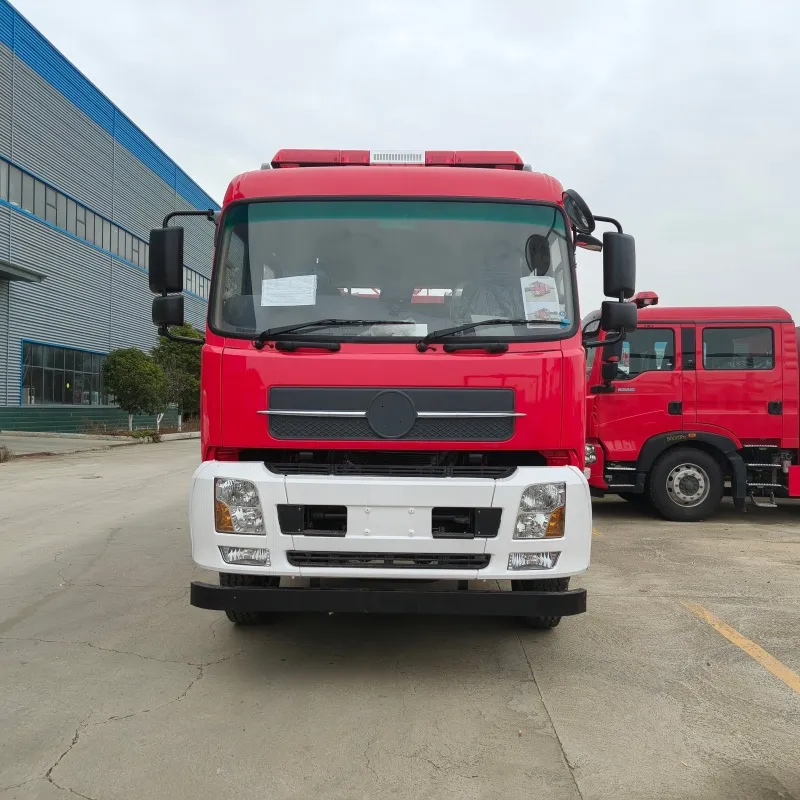
Foam Fire Truck CLW5190GXFPM50
The CLW5190GXFPM50 is a 4x2 foam fire truck built by Chengli Automobile Group for municipal fire brigades, civil defence agencies and industrial safety fleets. Its manufacturer record lists a 19,100 kg GVW class and 149.1 kW engine output. Right-hand-drive availability, final equipment fit-out and export documentation are confirmed per contract for government and donor-funded tenders.
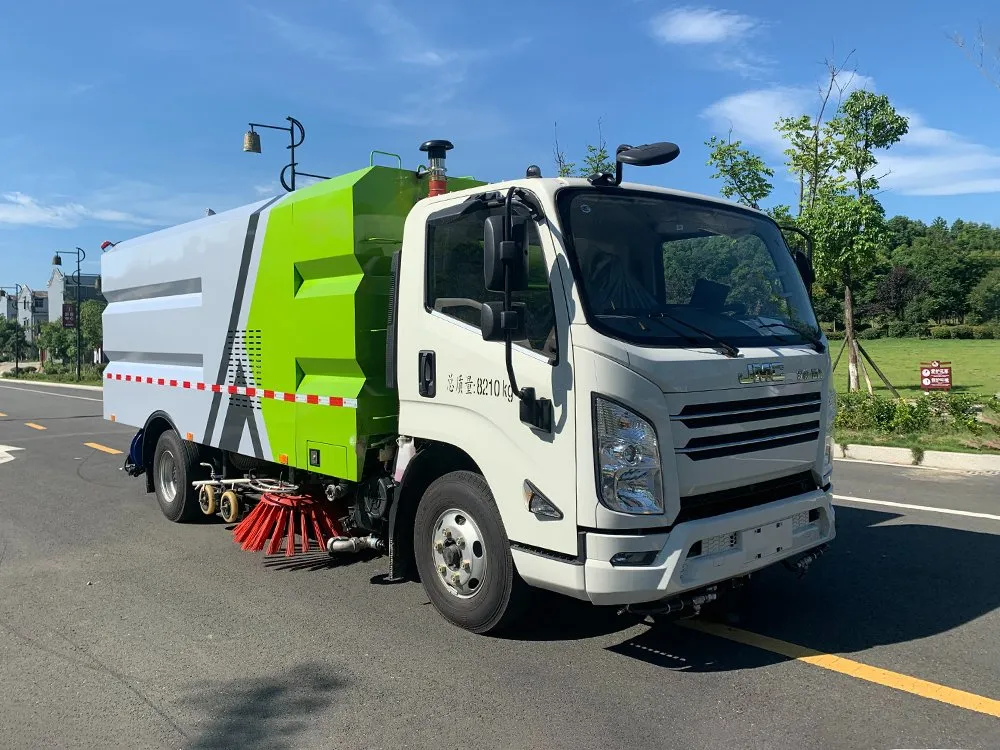
Washing-Sweeping Truck CLW5080TXSJ6
The CLW5080TXSJ6 is a 4x2 JMC-chassis washing-sweeping truck built by Chengli Automobile Group for city councils, municipal sanitation departments and public-works contractors. Its manufacturer record lists a 3 m cleaning width key specification, the JX1083TK26 chassis and a 8,210 kg GVW class. Right-hand-drive availability, final equipment fit-out and export documentation are confirmed per contract for government and donor-funded tenders.
TECHNICAL DOCUMENT REQUEST
Get the specification conversation started
Tell us your destination and vehicle requirement. PDF availability and the specification scope will be confirmed for the proposed model.