
Procurement guides
Ambulance Types Explained: Transport, BLS, ICU & Isolation
25 November 2026
In public health and humanitarian procurement, ambulances are classified into four functional tiers—Patient Transport (Type A), Basic Life Support (BLS / Type B), Intensive Care Unit / Advanced Life Support (ICU/ALS / Type C), and Negative Pressure Isolation units—defined by cabin height, onboard oxygen capacity, inverter power, and life-support equipment. Selecting the appropriate tier aligns fleet capital expenditure with receiving hospital capabilities and clinical staffing levels.
Procurement Resources & Bid Support
Primary Action: Request Tender Spec Sheet — Get the 4-Tier Ambulance Technical Comparison & Medical BoQ Matrix (Requires: Email or WhatsApp, Destination Country, Ambulance Tier)*
Secondary Action: Request Bid Quotation — Submit your Ministry of Health or NGO tender requirements for an itemized proposal*
Side-by-Side Comparison Table (Cabin, Oxygen, Power & Fit-Out)
Before drafting technical specifications, health ministries and hospital procurement committees should compare the structural, electrical, and medical outfitting differences across the four primary ambulance configurations. Use the table below to map each tier to its clinical mission and inspect matching chassis builds.
| Ambulance Category | Base Vehicle & Cabin Roof | Oxygen Supply System | Electrical & Inverter Power | Core Medical Fit-Out | Recommended Deploying Facility | Actions |
|---|---|---|---|---|---|---|
| 1. Patient Transport Ambulance (Ref. Type A) |
Standard or high-roof van (4x2); compact interior headroom (1,450–1,750 mm) | 1 x 10 L or 2 x 10 L portable/wall-mounted cylinders with flowmeter | 12V DC auxiliary battery + 600 W–1,000 W pure sine wave inverter | Auto-loading stretcher, squad bench, basic first-aid & trauma bag, suction unit | Primary health centers, outpatient clinics, non-critical inter-facility transfers | View Models | Get Spec/Quote |
| 2. Basic Life Support (BLS) (Ref. Type B) |
High-roof long-wheelbase van or 4x4 chassis (1,750–1,900 mm headroom) | 2 x 10 L or 2 x 20 L cylinders with dual oxygen outlets & manifold | 100Ah–150Ah AGM deep-cycle battery + 1,500 W–2,000 W pure sine wave inverter | Auto-loading stretcher, spine board, folding scoop stretcher, AED/monitor mount, electric suction | County & district hospitals, municipal emergency dispatch, highway trauma response | View Models | Get Spec/Quote |
| 3. ICU / Advanced Life Support (ALS) (Ref. Type C) |
Super-high-roof van or modular box body (≥1,900 mm standing height) | 2 x 40 L medical oxygen cylinders + central manifold, pressure alarm & 3–4 outlets | 200Ah+ dual-battery bank + 2,500 W–3,000 W pure sine wave inverter + 220V shore hookup | Transport ventilator, multi-parameter patient monitor, defibrillator, infusion & syringe pumps | Referral & teaching hospitals, regional trauma centers, critical inter-hospital ICU transfers | View Models | Get Spec/Quote |
| 4. Negative Pressure Isolation (Infectious Disease) |
High-roof van or box body with hermetically sealed driver-cabin bulkhead | 2 x 20 L or 2 x 40 L cylinders with external-access cylinder cabinet | 200Ah+ auxiliary power bank + dedicated isolated circuit for filtration & UV systems | Negative pressure exhaust unit (-10 Pa to -30 Pa differential), HEPA H14 filtration, ICU/BLS kit | National CDCs, port/airport quarantine units, infectious disease referral hospitals | View Models | Get Spec/Quote |
(Note: In North American procurement terminology, tenders also reference Type I [truck-chassis modular box], Type II [van-based ambulance], and Type III [cutaway van-chassis modular box]. In international B2G tenders across Africa and the Middle East, functional specifications typically align with the Type A / B / C classification above, which can be fulfilled on either integral high-roof vans or modular box bodies depending on payload requirements.)
Patient Transport vs BLS: Which Fits County & District Clinics?
For decentralized healthcare networks—such as county health departments, district general hospitals, and maternal health referral programs—the most frequent procurement decision is whether to allocate budget toward Patient Transport units or upgrade the fleet to Basic Life Support (BLS) ambulances.
Patient Transport Ambulances are engineered for hemodynamically stable patients who require supine transport, basic oxygen supplementation, and vital-sign observation between rural clinics and district hospitals. Because they avoid heavy multi-outlet oxygen manifolds, high-wattage electrical harnesses, and standing-height fiberglass roof extensions, they offer the lowest acquisition cost, superior fuel economy, and easier passage under low village overhangs.
Basic Life Support (BLS) Ambulances add critical pre-hospital stabilization capability without requiring an anesthesiologist or critical-care physician onboard. A high-roof BLS cabin allows paramedics or emergency medical technicians (EMTs) to stand upright while performing airway management, cardiopulmonary resuscitation (CPR), hemorrhage control, and fracture immobilization during transit. For district hospitals managing road traffic trauma or obstetric emergencies, specifying BLS builds ensures the vehicle can stabilize patients en route rather than serving solely as a transport carrier.
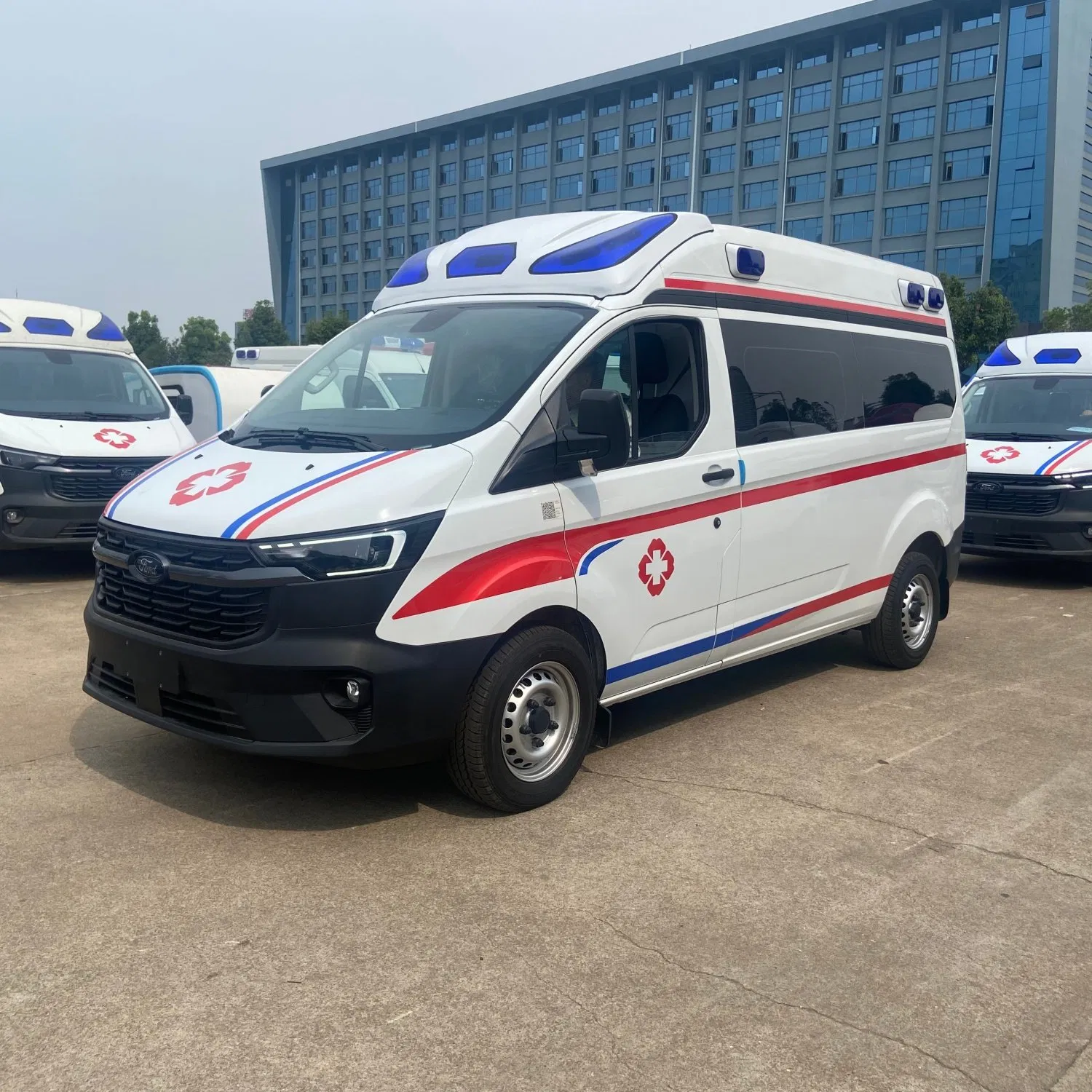
Patient Transport Van Ambulance (4x2)
|
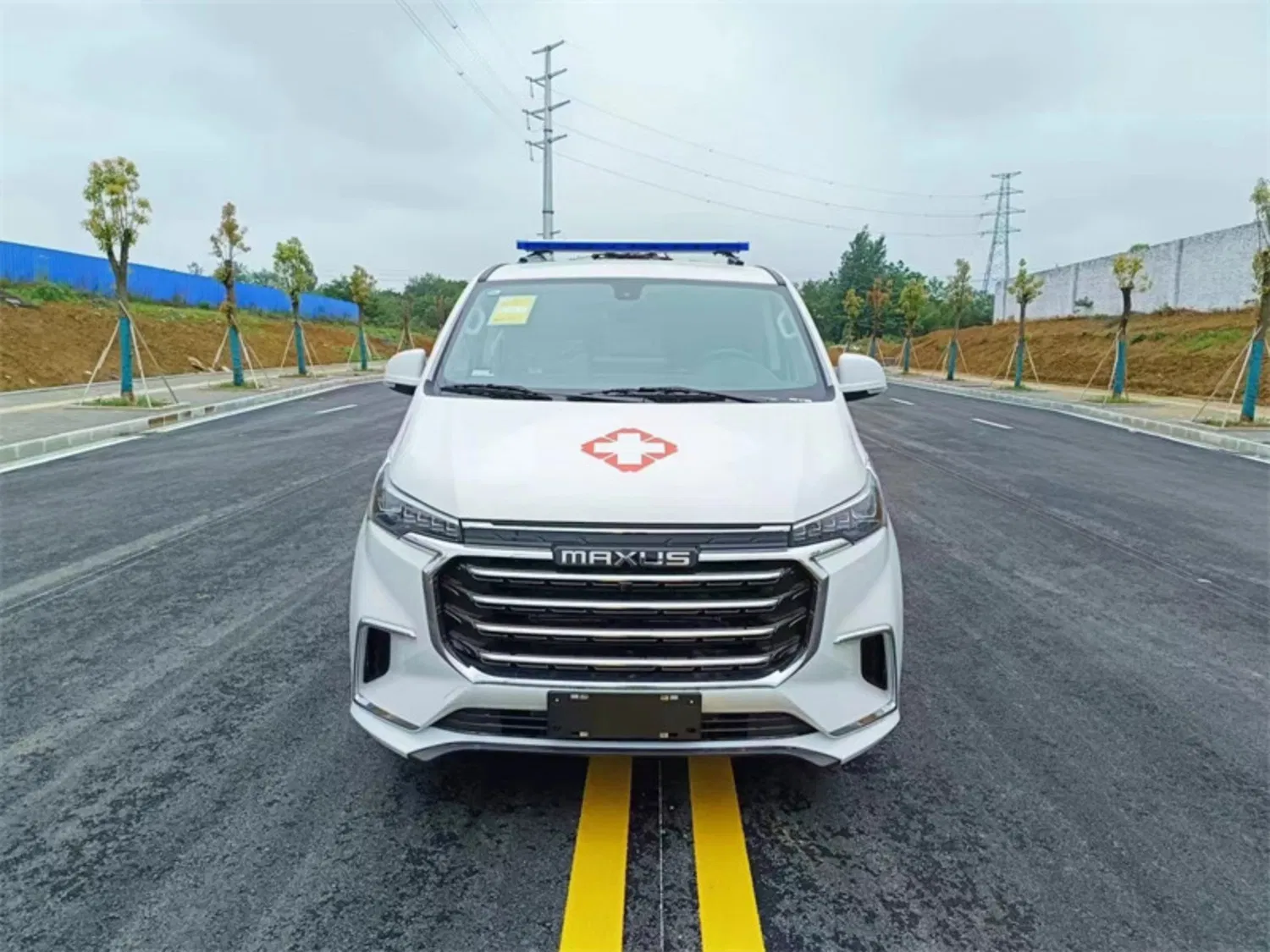
High-Roof Basic Life Support (BLS) Ambulance
|
When Ministries of Health Specify ICU & Negative Pressure Units
National referral hospitals, tertiary trauma centers, and public health emergency operations centers require specialized mobile critical-care platforms capable of sustaining life functions over multi-hour inter-hospital transfers.
ICU / Advanced Life Support (ALS) Ambulances function as mobile intensive care bays. Because transport ventilators, multiparameter cardiac monitors, biphasic defibrillators, and dual syringe/infusion pumps draw continuous AC/DC load, ICU builds incorporate reinforced alternators (180A–220A), high-capacity deep-cycle battery banks, dedicated stainless steel equipment rails, and 2 x 40 L medical oxygen cylinders stored in an externally ventilated rear cabinet. Standing interior headroom (≥1,900 mm) and ergonomic swivel captain's chairs allow specialist physicians and critical-care nurses to manage intubated patients safely while in motion.
Negative Pressure Isolation Ambulances are specified by Ministries of Health, port health authorities, and humanitarian health clusters to transport patients with suspected or confirmed airborne pathogens while reducing cross-contamination risk to the driver and medical crew. Key technical specifications to include in tender BoQs are:
- Hermetically Sealed Bulkhead: Complete structural separation between the driver's cab and the rear patient compartment, equipped with a two-way intercom system and dedicated independent air-conditioning loops (zero air recirculation between cabins).
- Controlled Airflow & Pressure Differential: An integrated exhaust fan and intake damper assembly engineered to maintain a stable negative pressure differential of -10 Pa to -30 Pa inside the patient cabin relative to ambient atmospheric pressure, with digital pressure monitoring visible to the crew.
- High-Efficiency Filtration: Exhaust air routed through a HEPA H14 filter (rated at 99.995% efficiency at 0.3 microns) prior to exterior discharge, paired with seamless, coved, non-porous PVC/FRP interior surfaces designed for rapid chemical washdown. (Note: Isolation ambulances are engineered to support infection-control containment protocols and are not marketed as medical treatment devices.)
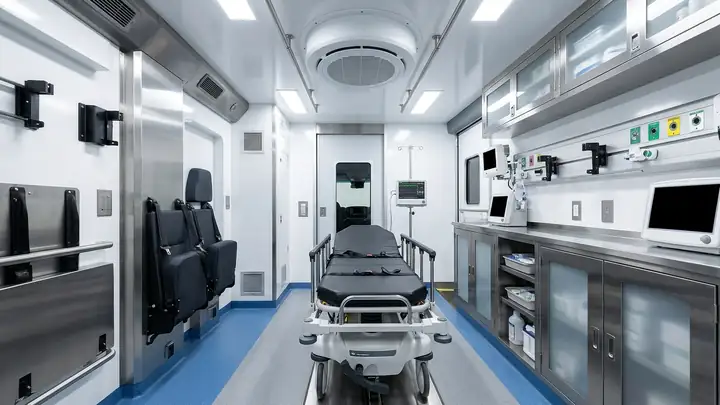
ICU / Advanced Life Support (ALS) Ambulance
|
Negative Pressure Isolation Ambulance
|
4x4 Rural Chassis vs Standard Van Base Vehicles
Choosing between a 4x2 commercial van and a 4x4 off-road chassis is the single most consequential chassis decision in rural and humanitarian ambulance procurement.
- When Standard 4x2 Vans Excel: On paved urban roads, peri-urban highways, and district feeder roads, unibody 4x2 vans (such as Toyota Hiace, Ford Transit, Maxus V80/V90, or Mercedes-Benz Sprinter platforms) provide lower floor loading height (easier stretcher entry), smoother ride comfort for spinal/trauma patients, larger internal cubic volume, and lower upfront acquisition cost.
- When 4x4 Off-Road Ambulances Are Mandatory: For rural health posts, mountainous terrain, seasonal floodplains, and UN/NGO humanitarian field missions where unpaved laterite or mud tracks are impassable for 4x2 vans, 4x4 ambulances built on heavy-duty pickup/light-truck platforms (such as Toyota Land Cruiser 78/79 Series, Toyota Hilux, Isuzu D-Max, or Iveco Daily 4x4) are essential. These builds feature high ground clearance (210–260 mm), part-time or full-time 4WD with low-range transfer cases, heavy-duty leaf-spring or reinforced coil suspension, snorkels, and front electric recovery winches. While a modular-box 4x4 ambulance carries a higher base chassis cost than a 4x2 van, its mechanical durability and widespread spare-parts availability in remote provinces drastically reduce fleet downtime.
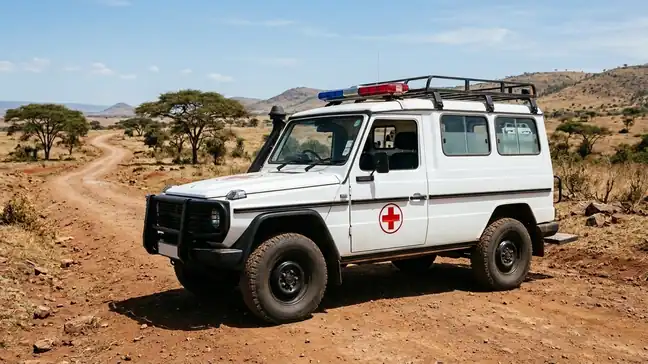
4x4 Off-Road Rural & Humanitarian Ambulance (BLS / ICU Configurable)
|
Tender Documentation, Standards Alignment & Export Support
To streamline evaluation by government tender boards, development banks, and international NGOs, every ambulance proposal specifies:
- Regulatory & Engineering Benchmarks: Medical cabin layouts, electrical safety circuits, and stretcher retention locks are built to align with buyer-specified tender requirements referencing EN 1789 or KKK-A-1822F functional dimensions and restraint parameters upon request. Where formal third-party certification is required by a tender, exact certifiable configurations are confirmed in writing prior to bid submission.
- Complete Export & Bid Package: Tender-specific Manufacturer's Authorisation Form (MAF), Certificate of Origin (CO), medical device catalog sheets, electrical wiring schematics, Pre-Shipment Inspection (SGS/BV/Intertek) support, and a 2-year spare parts kit (filters, belts, inverter fuses, oxygen regulators, and warning light modules).
Compliance Note: Last updated November 2026. Medical equipment brands and cabin configurations are finalized against each tender's approved Bill of Quantities.
Frequently Asked Questions
1. What are the four types of ambulances used in public health tenders?
The four primary ambulance types procured by health ministries and humanitarian agencies are: (1) Patient Transport Ambulances for stable, non-emergency transfers; (2) Basic Life Support (BLS) Ambulances for emergency stabilization and trauma response; (3) ICU / Advanced Life Support (ALS) Ambulances equipped with ventilators, defibrillators, and high-capacity oxygen for critical care; and (4) Negative Pressure Isolation Ambulances featuring sealed cabins and HEPA H14 filtration for infectious disease transport.
2. What is a Type III ambulance, and how does it compare to van ambulances?
A Type III ambulance uses a cutaway van chassis paired with a wider, square modular medical box mounted behind the cab, offering maximum interior storage and walk-through cab access. By contrast, a Type II ambulance uses an integral factory van body (such as a high-roof Transit or Hiace), which is narrower, lighter, and more economical for urban traffic and standard export shipping.
3. Should rural health clinics buy 4x4 pickup ambulances or high-roof 4x2 vans?
If ambulances must operate on unpaved roads, steep gradients, or unpaved tracks during rainy seasons, a 4x4 ambulance on a Land Cruiser, Hilux, or Isuzu chassis prevents immobilization and suspension failure. If roads between clinics and referral hospitals are paved, a high-roof 4x2 BLS van provides greater standing room at a lower unit cost.
4. How much oxygen and electrical power does an ICU ambulance require?
An ICU/ALS ambulance typically requires two 40-liter medical oxygen cylinders connected via an automatic or manual changeover manifold with multiple wall outlets, alongside a 2,500 W to 3,000 W pure sine wave inverter, a 200Ah+ auxiliary deep-cycle battery bank, and an external 220V shore-power inlet to run ventilators and infusion pumps continuously.
5. Can ambulances be supplied in both Left-Hand Drive (LHD) and Right-Hand Drive (RHD)?
Yes. All four ambulance tiers—including patient transport, BLS, ICU, and negative pressure units—are built on both LHD chassis (for West/Central Africa and the Middle East) and RHD chassis (for East and Southern Africa) with full export documentation.
Download Tender Spec Sheet or Request Bid Quotation
Request Tender Technical Schedule & Bid Support
Share your target vehicle capacity, steering side (LHD/RHD), destination port and tender timeline to receive model technical schedules, dimensional drawings and clause-by-clause bid support.
Request Bid Quotation & Technical Schedule | Review Tender Documents We Provide
Vehicle models to compare
Patient Transport Ambulance CLW5030XJHCDP
The CLW5030XJHCDP is a patient transport ambulance built by Chengli Automobile Group for ministries of health, public hospitals and humanitarian NGOs. Its manufacturer record lists a 3,300 kg GVW class and 162 kW engine output. Right-hand-drive availability, final equipment fit-out and export documentation are confirmed per contract for government and donor-funded tenders.
Patient Transport Ambulance CL5030XJH6AYS
The CL5030XJH6AYS is a 4x2 patient transport ambulance built by Chengli Automobile Group for ministries of health, public hospitals and humanitarian NGOs. Its manufacturer record lists a 2,900 kg GVW class and 186.4 kW engine output. Right-hand-drive availability, final equipment fit-out and export documentation are confirmed per contract for government and donor-funded tenders.
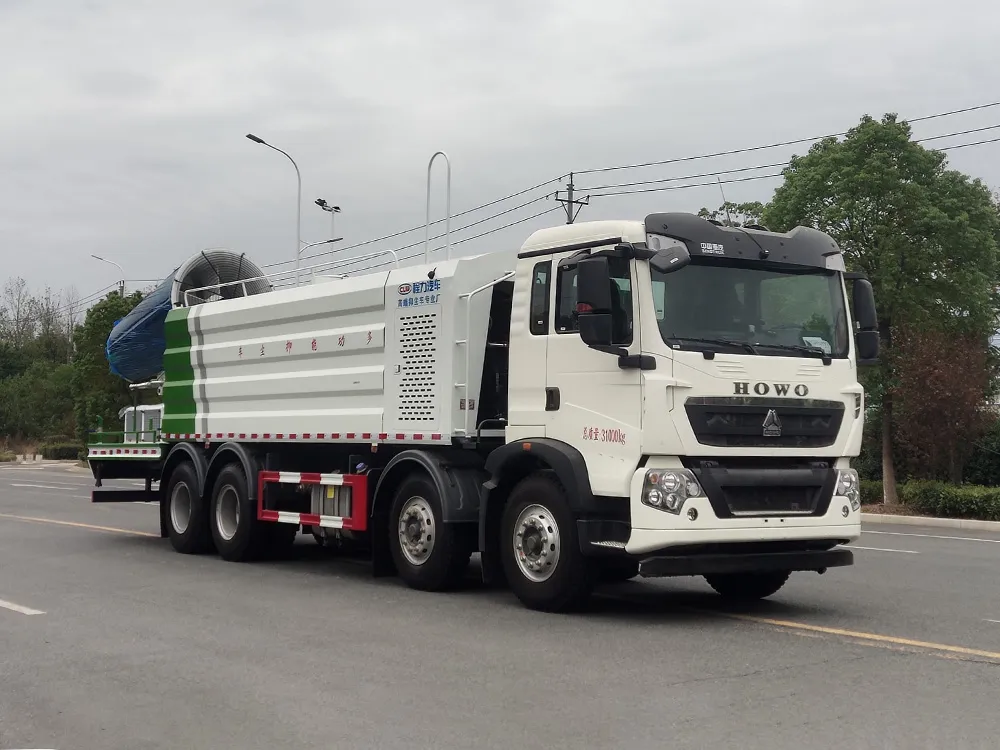
Dust Suppression Truck CL5310TDYZ6YC
The CL5310TDYZ6YC is a 8x4 Sinotruk-chassis dust suppression truck built by Chengli Automobile Group for city councils, municipal sanitation departments and public-works contractors. Its manufacturer record lists a 21 m³ key specification, a 31,000 kg GVW class and 257 kW engine output. Right-hand-drive availability, final equipment fit-out and export documentation are confirmed per contract for government and donor-funded tenders.
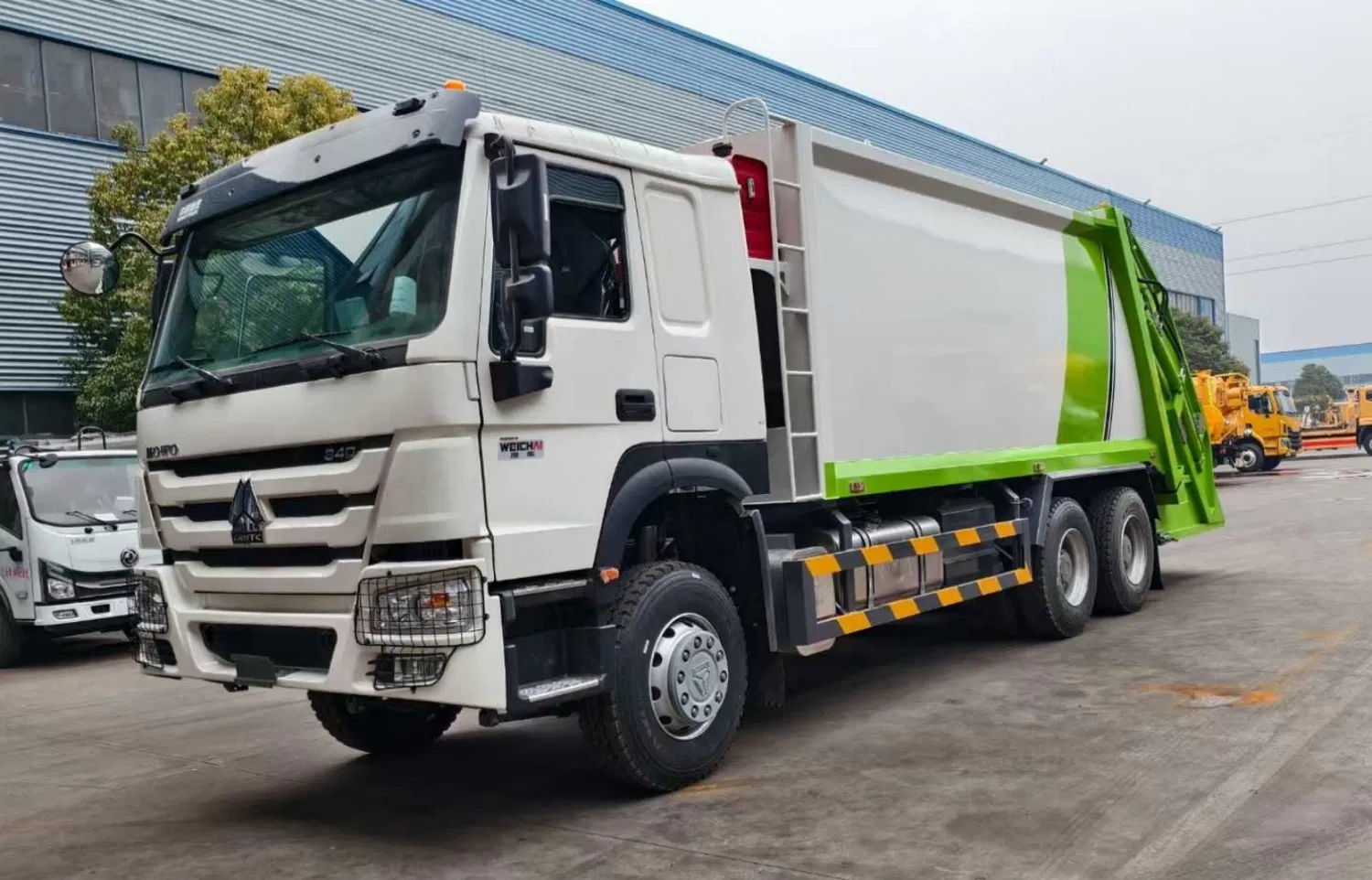
Refuse Compactor CLW5250ZYSAHJ
The CLW5250ZYSAHJ is a 6x4 refuse compactor built by Chengli Automobile Group for city councils, municipal sanitation departments and public-works contractors. Its manufacturer record lists a 20–23 m³ key specification and a 25,000 kg GVW class. Right-hand-drive availability, final equipment fit-out and export documentation are confirmed per contract for government and donor-funded tenders.
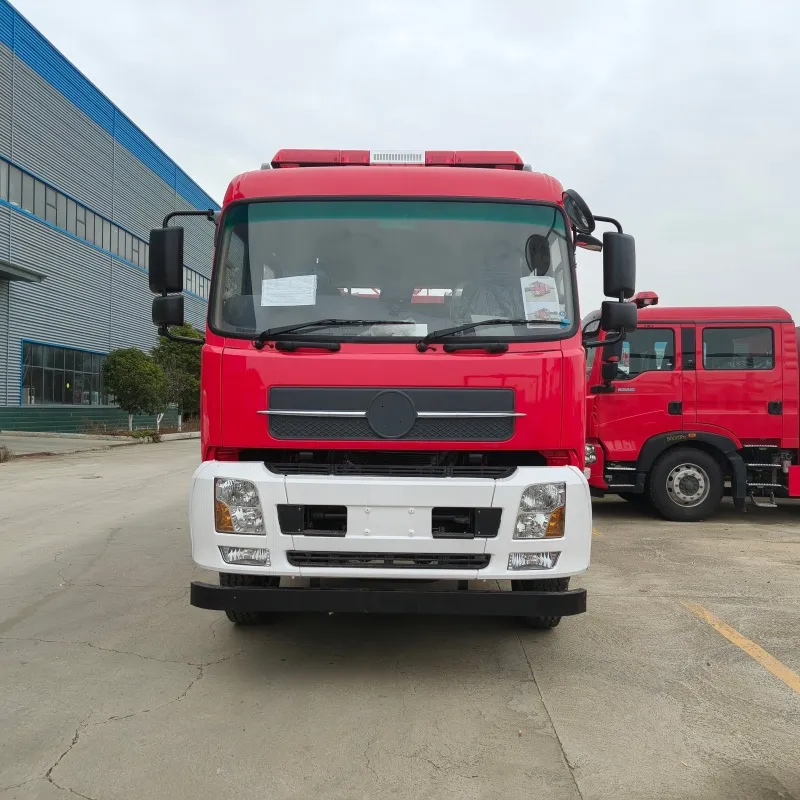
Foam Fire Truck CLW5190GXFPM50
The CLW5190GXFPM50 is a 4x2 foam fire truck built by Chengli Automobile Group for municipal fire brigades, civil defence agencies and industrial safety fleets. Its manufacturer record lists a 19,100 kg GVW class and 149.1 kW engine output. Right-hand-drive availability, final equipment fit-out and export documentation are confirmed per contract for government and donor-funded tenders.
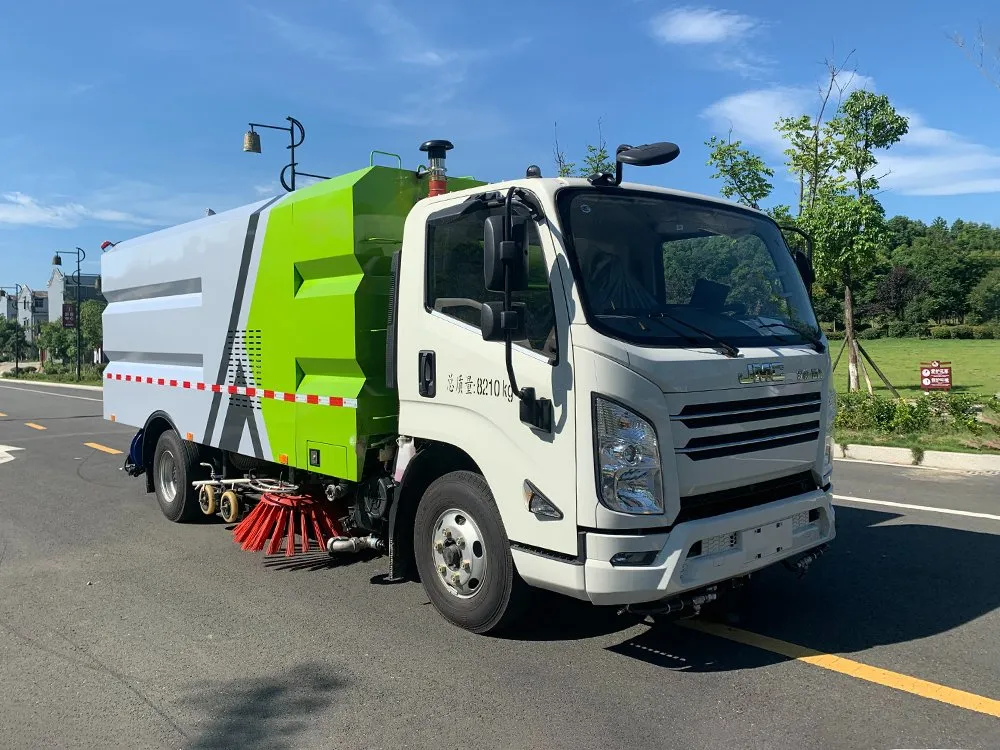
Washing-Sweeping Truck CLW5080TXSJ6
The CLW5080TXSJ6 is a 4x2 JMC-chassis washing-sweeping truck built by Chengli Automobile Group for city councils, municipal sanitation departments and public-works contractors. Its manufacturer record lists a 3 m cleaning width key specification, the JX1083TK26 chassis and a 8,210 kg GVW class. Right-hand-drive availability, final equipment fit-out and export documentation are confirmed per contract for government and donor-funded tenders.
TECHNICAL DOCUMENT REQUEST
Get the specification conversation started
Tell us your destination and vehicle requirement. PDF availability and the specification scope will be confirmed for the proposed model.