
Procurement guides
What Size Water Tank Does a Fire Truck Need?
25 November 2026
A municipal fire truck needs a 3,000–4,500 L tank for narrow urban alleys and markets, a 6,000–8,000 L tank for standard city and county first-out stations, a 10,000–12,000 L tank for arterial or industrial corridors with limited hydrants, and a 15,000–18,000 L tank for bulk water-relay tankers serving non-hydrant suburbs and petrochemical zones. Choosing the right capacity requires balancing onboard firefighting duration against street width, turning radius, bridge axle limits, and local hydrant pressure—because an oversized truck that cannot turn into a market street or legally cross a rural culvert fails its core mission.
Capacity Sizing Resources & Bid Support
Primary Action: Request Fire Truck Tank Sizing & Axle Load Sheet — 3,000 L to 18,000 L Dimensions, Turning Radius & GVW Matching Guide (Requires: Email or WhatsApp, Country, Road Profile)*
Secondary Action: Request Bid Quotation — Get dimensional GA drawings and budget estimates for your target capacity*
Fire Truck Water Tank Capacity Matrix (3,000 L to 18,000 L)
Water weighs exactly 1 metric ton per 1,000 liters. Every extra 2,000 liters of onboard water adds roughly 2.5 to 3.0 metric tons of combined liquid, steel tank structure, and subframe weight—pushing the vehicle into a heavier axle class and wider turning envelope. Use the operational matrix below to match tank volume to your road infrastructure and required pumping endurance.
| Tank Capacity Tier | Chassis & Minimum GVW | Typical Overall Width / Length | Rated Pump Flow (@ 10 bar) | Continuous Runtime (2 Handlines @ 600 L/min / Full Monitor) | Optimal Road & Hydrant Environment | Actions |
|---|---|---|---|---|---|---|
| 3,000 L – 4,500 L (Compact Urban) |
4x2 or 4x4 Light/Medium Duty (10–14 Ton GVW) | 2,250–2,400 mm W × 6,800–7,500 mm L | 30 – 40 L/s (1,800 – 2,400 L/min) | 5.0 – 7.5 min (handlines) / ~2.0 min (roof monitor) | Historic city centers, crowded open-air markets, narrow township lanes, steep rural hills | View Models | Get Spec/Quote |
| 6,000 L – 8,000 L (Standard Municipal) |
4x2 Heavy Duty (16–18 Ton GVW) | 2,480–2,500 mm W × 8,200–8,600 mm L | 50 – 60 L/s (3,000 – 3,600 L/min) | 10.0 – 13.3 min (handlines) / 2.5 – 3.3 min (roof monitor) | Standard city streets, county headquarters, mixed urban/suburban areas with intermittent hydrants | View Models | Get Spec/Quote |
| 10,000 L – 12,000 L (Heavy Arterial / Industrial) |
6x4 Tandem Rear Axle (25 Ton GVW) | 2,500 mm W × 9,600–10,200 mm L | 60 – 80 L/s (3,600 – 4,800 L/min) | 16.6 – 20.0 min (handlines) / 3.0 – 3.5 min (roof monitor) | Main municipal boulevards, industrial estates, seaports, highway stations, low-hydrant cities | View Models | Get Spec/Quote |
| 15,000 L – 18,000 L (Bulk Water Relay) |
6x4 or 8x4 Heavy Duty (31–35 Ton GVW) | 2,500–2,550 mm W × 10,800–11,800 mm L | 80 – 100 L/s (4,800 – 6,000 L/min) | 25.0 – 30.0 min (handlines) / 3.2 – 3.8 min (high-flow monitor) | Non-hydrant peri-urban settlements, bulk water supply relay, petrochemical complexes, timber yards | View Models | Get Spec/Quote |
Narrow Urban Alleys vs Arterial & Non-Hydrant Municipalities
When procurement boards skip a physical street-access audit before setting tank size, cities frequently end up with impressive 15,000-liter trucks parked two blocks away from a burning market because the 11-meter wheelbase cannot clear parked cars or sharp 90-degree corners. Sizing must follow local access geometry and hydrant reliability:
- High-Density Markets & Informal Settlements (3,000 L – 4,500 L): In older commercial districts across East and West Africa, South Asia, and the Middle East, effective clear lane width often shrinks to 3.0–3.5 meters once roadside stalls and parked vehicles are accounted for. A compact 4x2 or 4x4 apparatus with a 3,300–3,800 mm wheelbase, ~2,300 mm body width, and 3,500–4,000 L water reserve arrives 3 to 5 minutes ahead of heavy tankers—knocking down a nascent room or shop fire before flashover occurs.
- Pressurized vs. Non-Pressurized Municipal Hydrant Grids (6,000 L – 8,000 L): European and North American city pumpers often carry only 2,000–3,000 L because high-pressure street hydrants sit every 100 meters. Where municipal water mains suffer seasonal pressure drops, scheduled rationing, or missing hydrant caps, specifying 6,000 L to 8,000 L on an 18-ton 4x2 chassis gives a six-person crew 10 to 13 minutes of uninterrupted dual-handline attack—long enough to extinguish most single-structure residential fires entirely on onboard water without searching for a working hydrant.
- Peri-Urban Sprawl & Industrial Corridors Without Hydrants (10,000 L – 18,000 L): When responding to warehouse, factory, or multi-shop fires 15 kilometers from the nearest reliable refill standpipe, a single 4,000 L truck runs dry in under 6 minutes. Deploying a 6x4 10,000–12,000 L unit or an 8x4 15,000–18,000 L bulk tanker allows crews to sustain aggressive roof-monitor knockdown—or act as a mobile nurse tanker feeding two smaller frontline pumpers parked inside narrow side lanes via 65 mm relay hoses.
Matching Tank Volume to Chassis GVW, Axle Loads & Pump Flow
One of the costliest technical errors in public fire tenders is specifying a tank volume that exceeds the base chassis's safe Gross Vehicle Weight (GVW) after accounting for crew, water, pump, bodywork, and loose tools. As a practical engineering check, total laden weight equals:
$$\text{Laden Weight} = \text{Chassis Curb Weight} + \text{Tank \& Superstructure} + \text{Water/Foam Mass} + \text{Crew (6 × 85 kg)} + \text{Loose Equipment (500–1,000 kg)}$$
- Why 8,000 L Is the Practical Ceiling for Standard 4x2 Chassis: A typical 4x2 18-ton heavy truck chassis has a bare curb weight of ~6,200–6,800 kg. Adding ~2,200 kg for the superstructure, pump, lockers, and piping plus ~1,100 kg for crew and loose tools leaves roughly 8,000 kg of legal liquid payload. Attempting to force a 10,000 L water tank onto a 4x2 18-ton chassis overloads the rear axle by 2+ metric tons—causing rapid tire blowouts, cracked spring hangers, longer braking distances, and rollover instability during emergency cornering. Any capacity of 10,000 L and above requires a 6x4 tandem-axle chassis (≥25-ton GVW), while 15,000–18,000 L builds require a 6x4 heavy (31-ton) or 8x4 (32–35-ton) platform.
- Balancing Pump Flow to Tank Reserve: Mounting a 100 L/s (6,000 L/min) industrial pump onto a 4,000 L tank drains the entire truck in 40 seconds at full throttle. Conversely, pairing a 30 L/s pump with an 18,000 L tank under-utilizes the chassis engine and fails to deliver adequate jet reach on large industrial fires. Target an engineering ratio where the tank provides 2.5 to 4.0 minutes of continuous discharge at the roof monitor's rated output (which equates to 10 to 25 minutes on standard 300 L/min firefighting handlines).
Reference Apparatus by Tank Capacity Tier
Review four chassis-matched builds from our fire trucks catalog to confirm physical dimensions, axle layouts, and pump pairings before locking your tender BoQ.
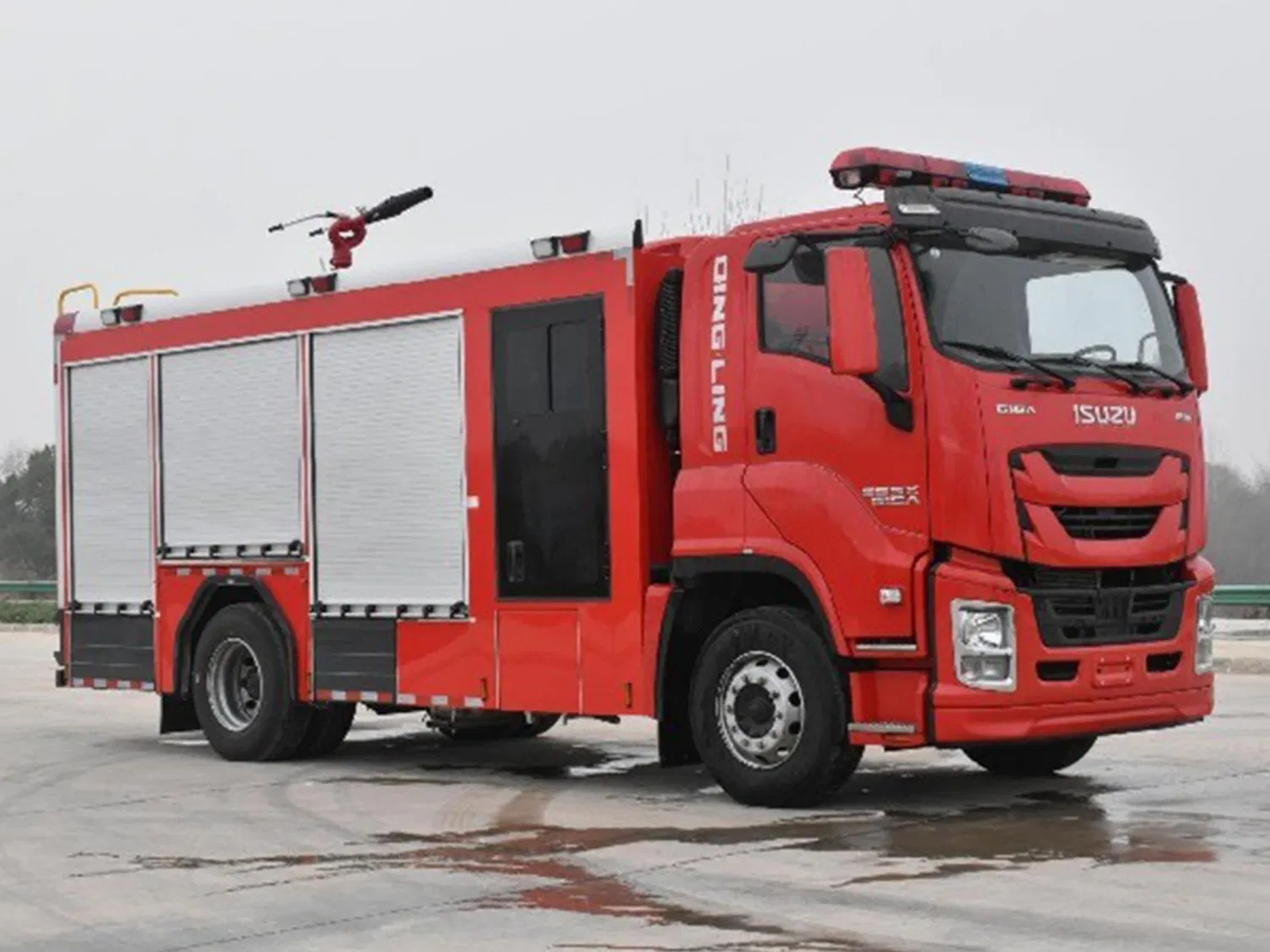
3,500 – 4,000 L Compact Urban Fire Truck
|
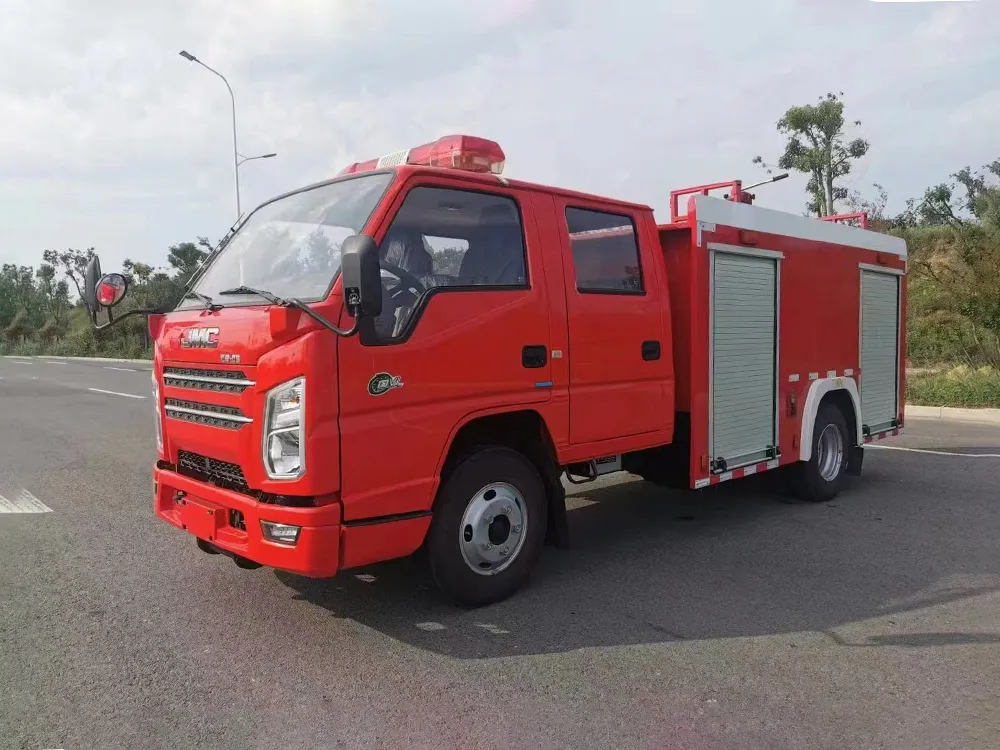
6,000 – 8,000 L Standard Municipal First-Out Truck
|
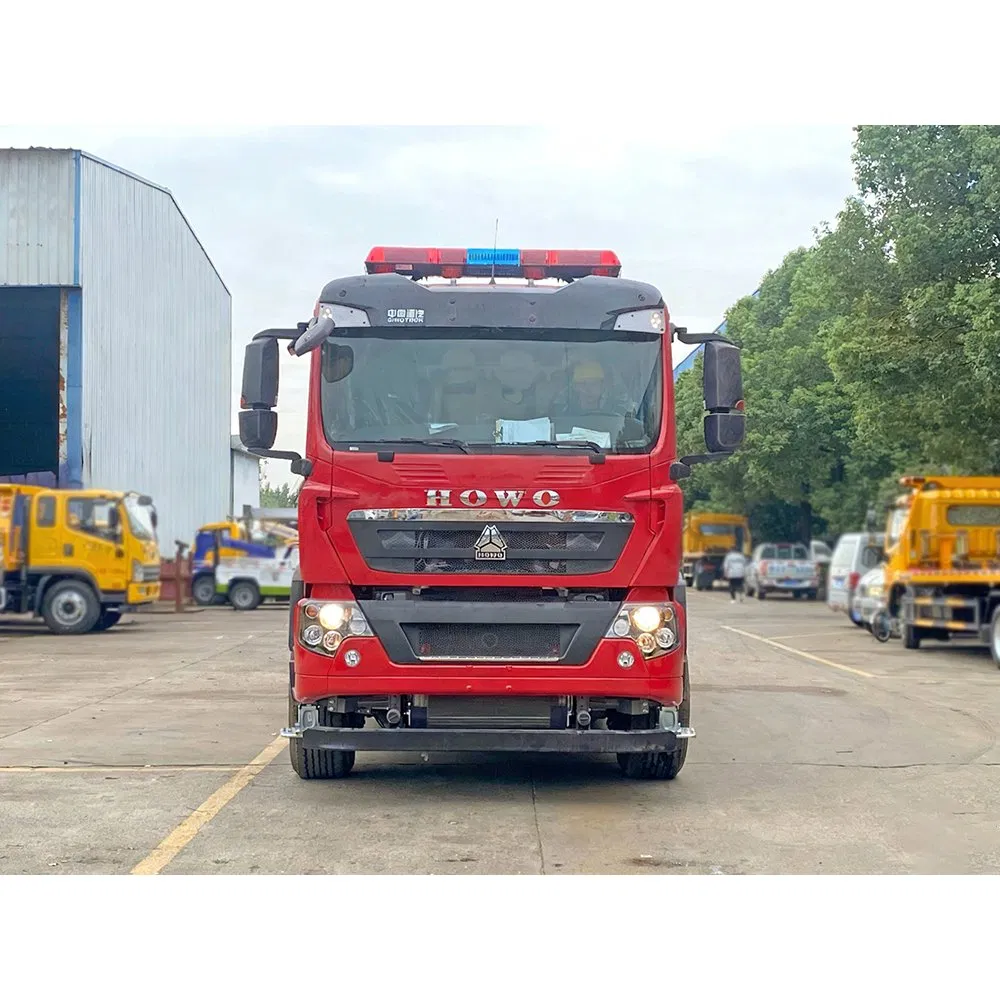
10,000 – 12,000 L Heavy 6x4 Municipal / Industrial Truck
|
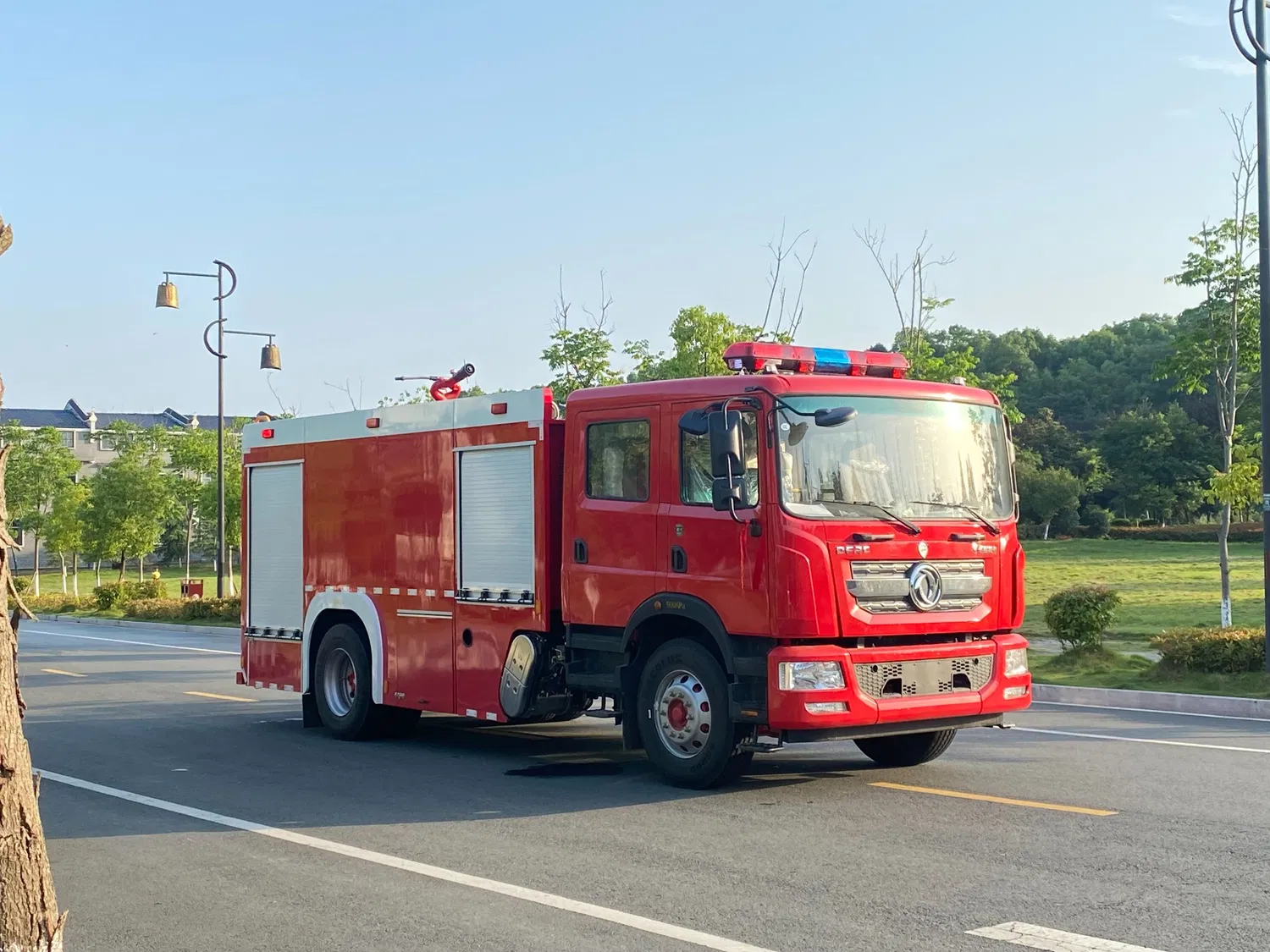
15,000 – 18,000 L Bulk Water & Foam Relay Tanker
|
Baffle Engineering, Hydrostatic Testing & Tender Verification
Liquid surge inside a half-empty water tank is a leading cause of fire truck rollovers during emergency cornering. Every tender specification for 3,000 L to 18,000 L apparatus should require verifiable structural and export quality proofs:
- Internal Anti-Surge Baffles & Subframe Isolation: Tanks must feature longitudinal and transverse welded baffle plates subdividing the interior into cells of no more than 1,500–2,000 liters each, with staggered surge openings and bottom drainage notches so water empties completely during pumping. Tanks should mount to the chassis frame rails via a flexible spring-loaded or rubber-isolated subframe that absorbs chassis twisting on rough rural roads without cracking tank welds.
- Mandatory Export & Bid Documents: Tender-specific Manufacturer's Authorisation Form (MAF), Certificate of Origin (CO), axle-load distribution and stability calculation sheets, factory hydrostatic pressure test reports (verifying zero weld seepage), pump performance test curves, and Pre-Shipment Inspection (SGS/BV/Intertek) clearance.
- Engineering Standards & Crew Commissioning: Tank structural design, sump flow geometry, and pump plumbing are built to align with buyer-specified tender requirements referencing EN 1846 or NFPA 1901 functional layouts upon request (formal third-party type-approval certificates are confirmed in writing only where explicitly contracted). Delivery packages can include on-site crew commissioning covering drafting from open ponds/rivers, relay pumping between tankers, and a 2-year preventive spare parts kit.
Compliance Note: Last updated November 2026. Final dimensional tolerances and legal axle limits are verified against destination country road traffic regulations (LHD/RHD) before chassis production.
Frequently Asked Questions
1. What size water tank does a fire truck have on average?
For standard municipal fire stations in cities with limited or unreliable hydrants, the most common capacity is 6,000 L to 8,000 L mounted on an 18-ton 4x2 heavy chassis. Compact urban rescue units typically carry 3,000 L to 4,500 L, while heavy industrial and water-relay tankers carry 10,000 L to 18,000 L on 6x4 or 8x4 platforms.
2. How long does a 6,000-liter fire truck water tank last during a fire?
At standard structural firefighting attack flows using two 65 mm handlines discharging 300 L/min each (600 L/min combined), a 6,000-liter tank supplies 10 minutes of continuous firefighting. If the crew opens the roof monitor at full 2,400 L/min (40 L/s) discharge for rapid exterior knockdown, the tank empties in 2.5 minutes.
3. Can a 10,000-liter water tank be mounted on a 4x2 truck chassis?
No—mounting a 10,000 L water tank on a standard 18-ton 4x2 chassis exceeds safe rear-axle weight limits once chassis curb weight, pump, bodywork, crew, and loose tools are included. Tenders specifying 10,000 L to 12,000 L should mandate a 6x4 tandem-rear-axle chassis (25-ton GVW minimum) to guarantee braking safety and structural durability.
4. Should a municipality buy one 18,000 L truck or two 8,000 L trucks?
For a single-station town with narrow residential streets, two 6,000–8,000 L 4x2 units provide better redundancy (if one truck is under service, the town still has protection) and faster alley access. Conversely, a metropolitan brigade that already operates nimble 4,000–6,000 L frontline pumpers gains maximum strategic value by adding a 15,000–18,000 L bulk tanker for water-relay support.
5. Does adding a foam tank reduce the total water capacity of a fire truck?
Yes—within a fixed chassis GVW limit, liquid volume is shared. On an 18-ton 4x2 chassis limited to ~8,000 L of total liquid payload, specifying a 1,500 L foam cell reduces the water tank to 6,500 L. If your brigade needs a full 8,000–10,000 L of water plus 2,000–3,000 L of foam, step up to a 6x4 25-ton chassis.
Download Tank Sizing & Axle Load Sheet or Request Bid Quotation
Request Tender Technical Schedule & Bid Support
Share your target vehicle capacity, steering side (LHD/RHD), destination port and tender timeline to receive model technical schedules, dimensional drawings and clause-by-clause bid support.
Request Bid Quotation & Technical Schedule | Review Tender Documents We Provide
Vehicle models to compare
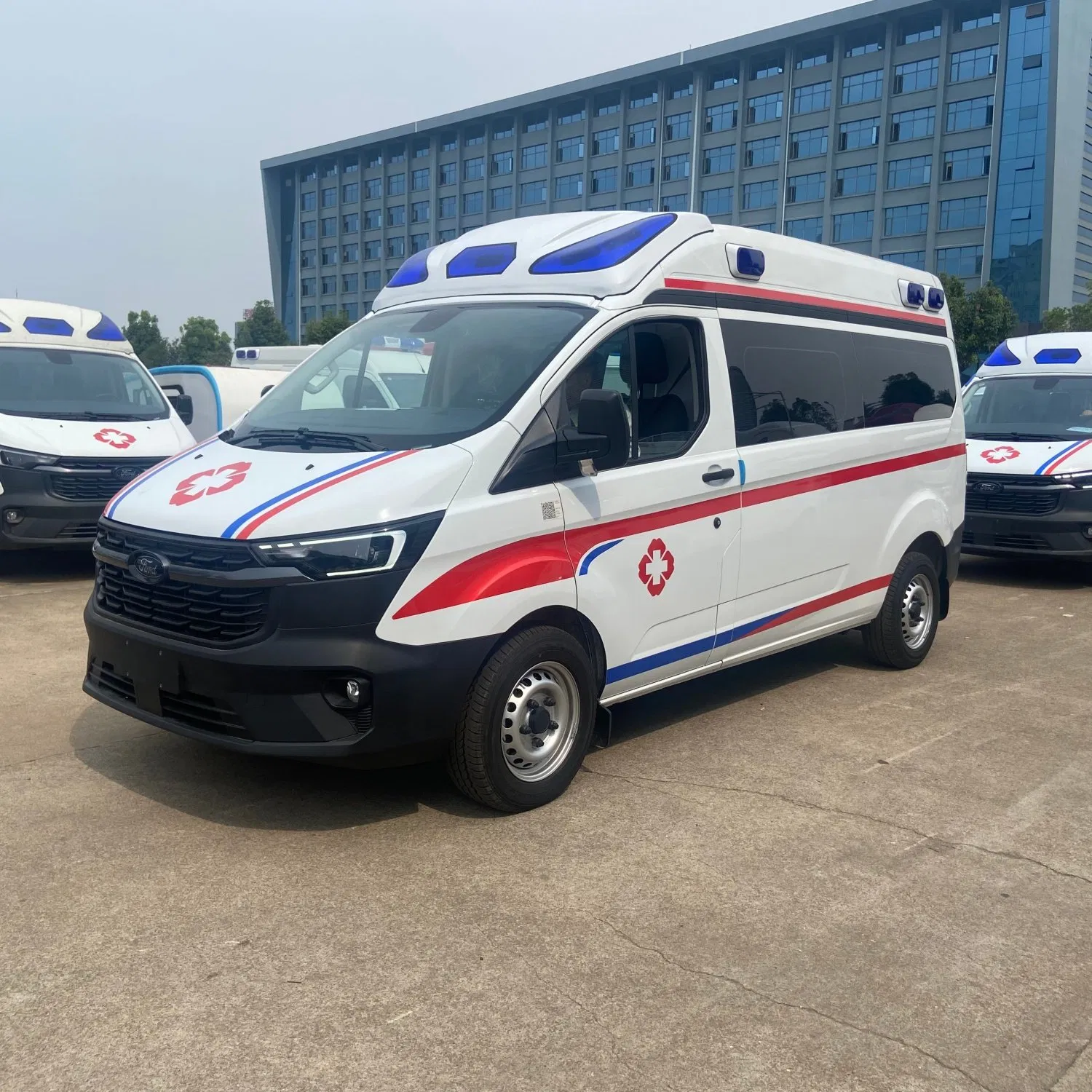
Patient Transport Ambulance CLW5030XJHCDP
The CLW5030XJHCDP is a patient transport ambulance built by Chengli Automobile Group for ministries of health, public hospitals and humanitarian NGOs. Its manufacturer record lists a 3,300 kg GVW class and 162 kW engine output. Right-hand-drive availability, final equipment fit-out and export documentation are confirmed per contract for government and donor-funded tenders.
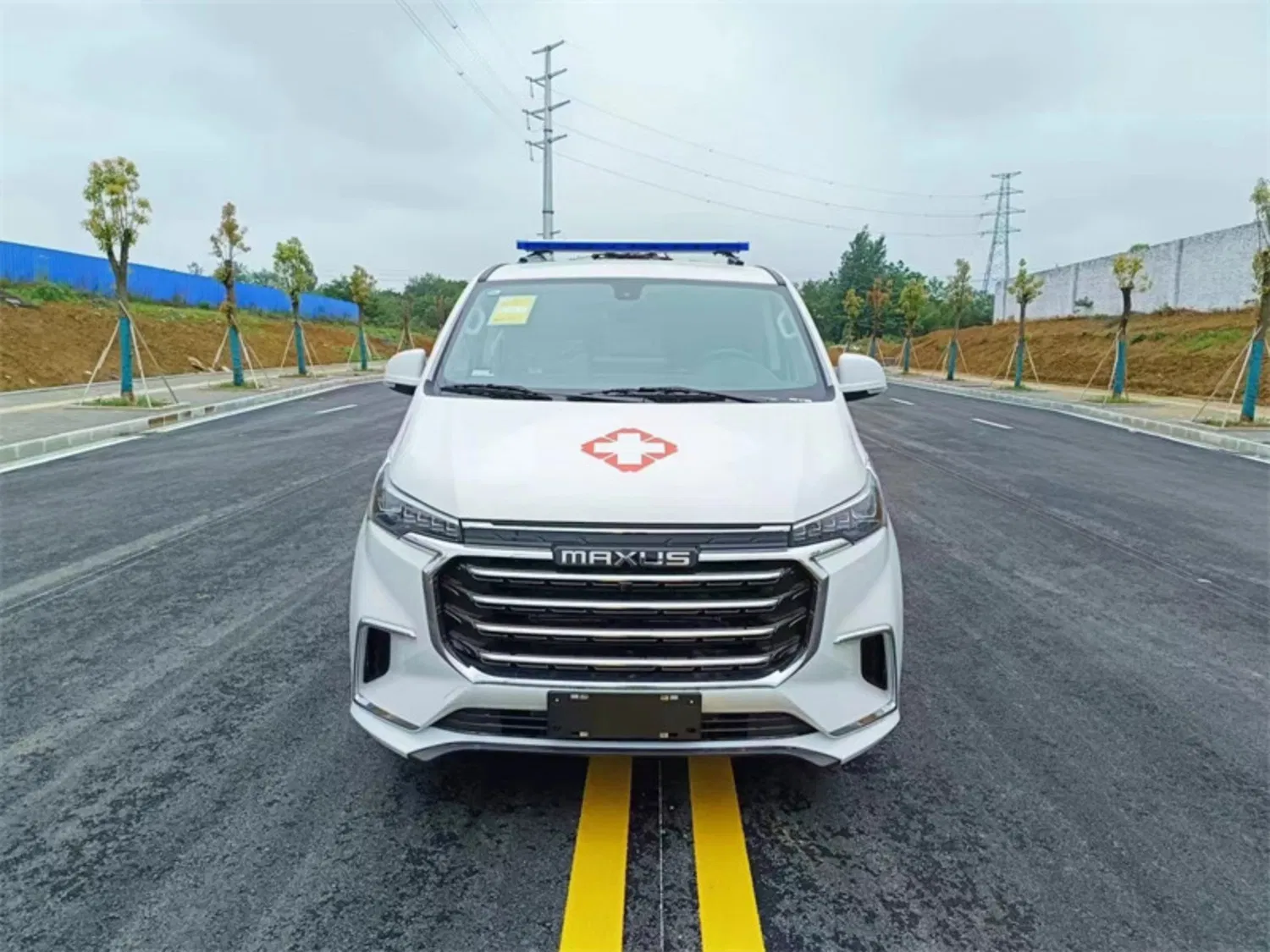
Patient Transport Ambulance CL5030XJH6AYS
The CL5030XJH6AYS is a 4x2 patient transport ambulance built by Chengli Automobile Group for ministries of health, public hospitals and humanitarian NGOs. Its manufacturer record lists a 2,900 kg GVW class and 186.4 kW engine output. Right-hand-drive availability, final equipment fit-out and export documentation are confirmed per contract for government and donor-funded tenders.
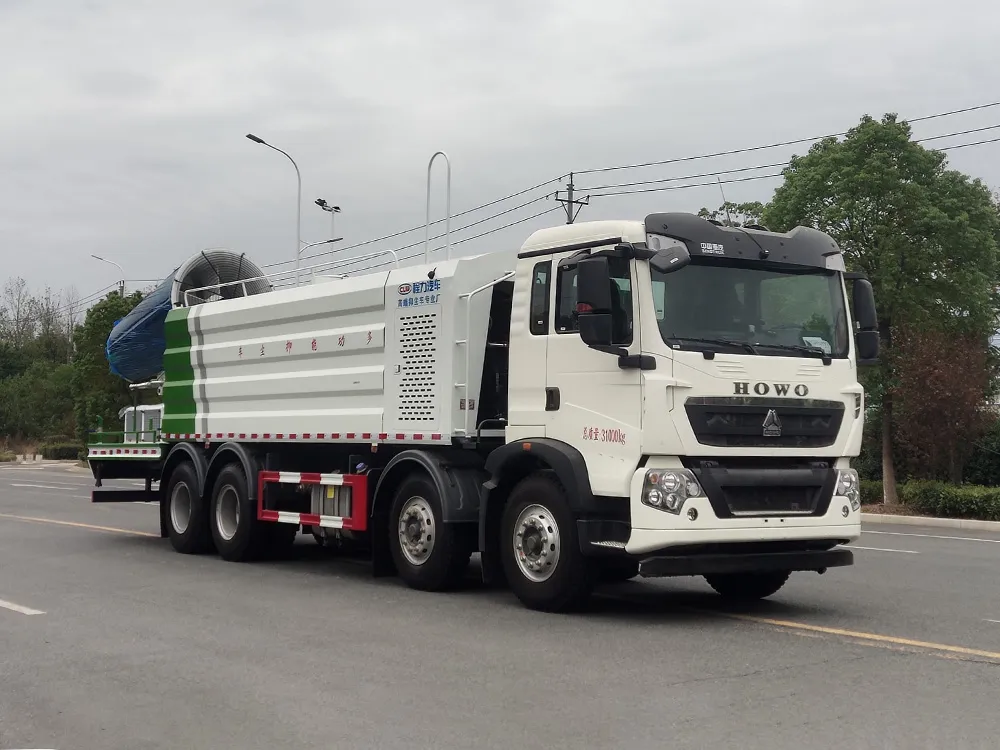
Dust Suppression Truck CL5310TDYZ6YC
The CL5310TDYZ6YC is a 8x4 Sinotruk-chassis dust suppression truck built by Chengli Automobile Group for city councils, municipal sanitation departments and public-works contractors. Its manufacturer record lists a 21 m³ key specification, a 31,000 kg GVW class and 257 kW engine output. Right-hand-drive availability, final equipment fit-out and export documentation are confirmed per contract for government and donor-funded tenders.
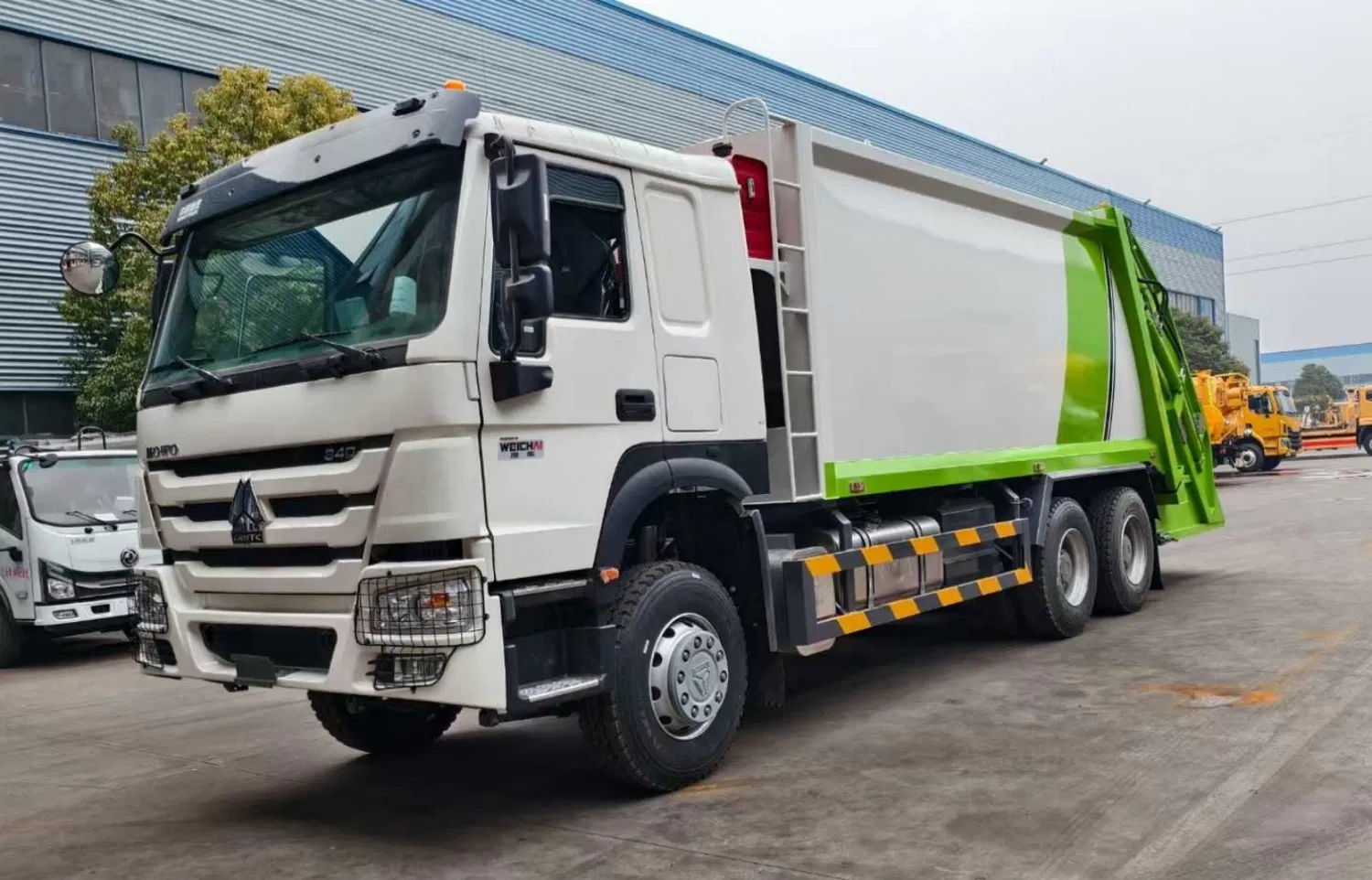
Refuse Compactor CLW5250ZYSAHJ
The CLW5250ZYSAHJ is a 6x4 refuse compactor built by Chengli Automobile Group for city councils, municipal sanitation departments and public-works contractors. Its manufacturer record lists a 20–23 m³ key specification and a 25,000 kg GVW class. Right-hand-drive availability, final equipment fit-out and export documentation are confirmed per contract for government and donor-funded tenders.
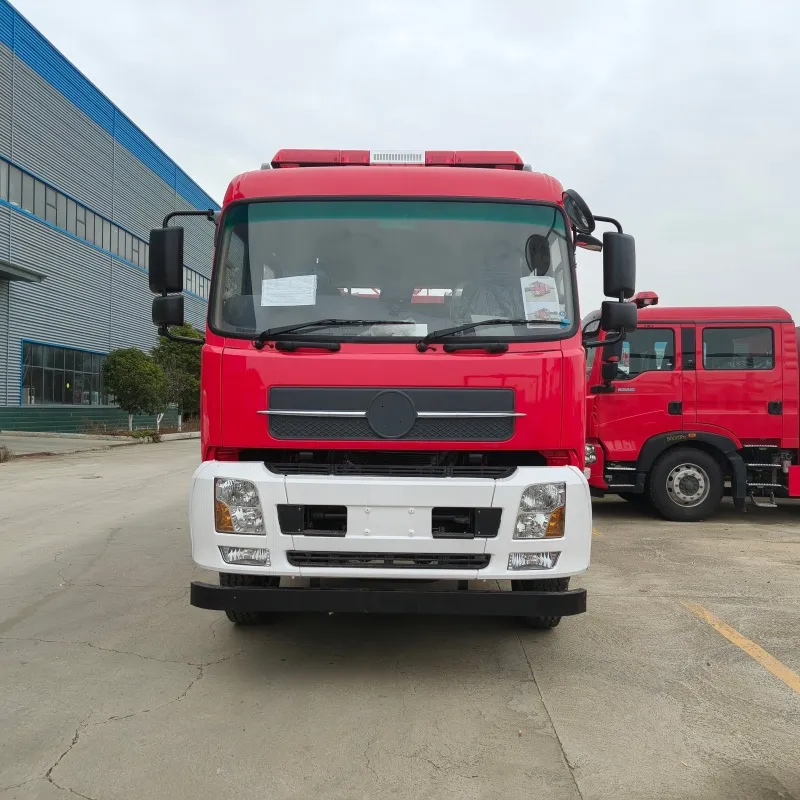
Foam Fire Truck CLW5190GXFPM50
The CLW5190GXFPM50 is a 4x2 foam fire truck built by Chengli Automobile Group for municipal fire brigades, civil defence agencies and industrial safety fleets. Its manufacturer record lists a 19,100 kg GVW class and 149.1 kW engine output. Right-hand-drive availability, final equipment fit-out and export documentation are confirmed per contract for government and donor-funded tenders.
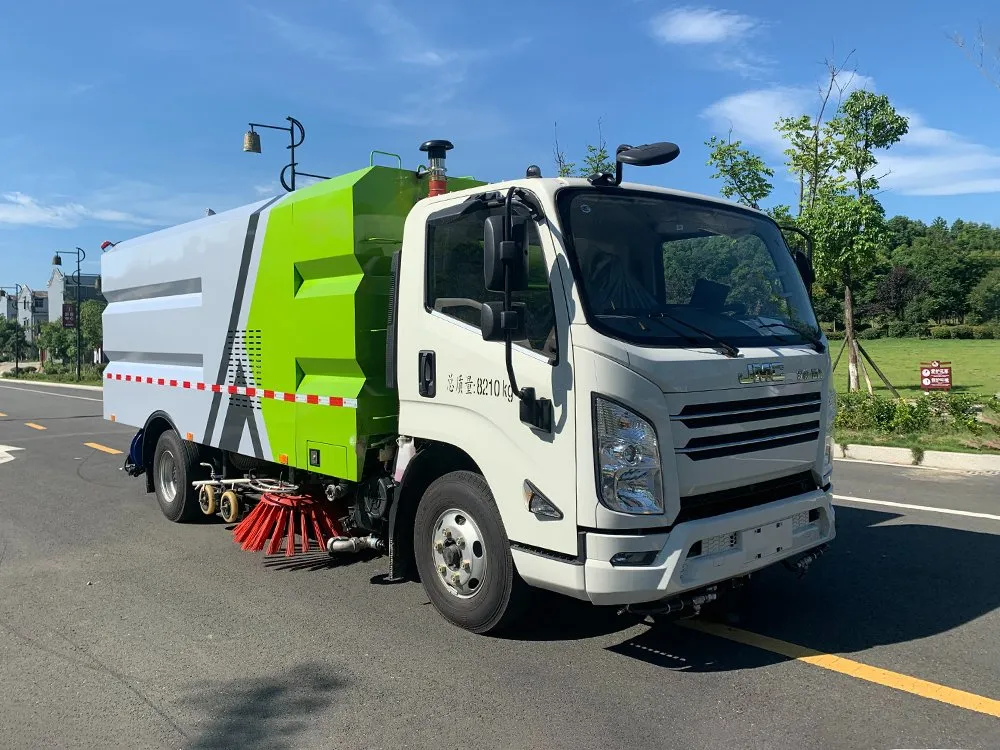
Washing-Sweeping Truck CLW5080TXSJ6
The CLW5080TXSJ6 is a 4x2 JMC-chassis washing-sweeping truck built by Chengli Automobile Group for city councils, municipal sanitation departments and public-works contractors. Its manufacturer record lists a 3 m cleaning width key specification, the JX1083TK26 chassis and a 8,210 kg GVW class. Right-hand-drive availability, final equipment fit-out and export documentation are confirmed per contract for government and donor-funded tenders.
TECHNICAL DOCUMENT REQUEST
Get the specification conversation started
Tell us your destination and vehicle requirement. PDF availability and the specification scope will be confirmed for the proposed model.