
Procurement guides
How Many Garbage Trucks Does a City Need?
26 November 2026
As a baseline planning benchmark, a city requires approximately 1 active 12 m³ rear-loading compactor truck (carrying ~8 metric tons per trip across 2 daily trips) for every 20,000 to 25,000 urban residents—plus a mandatory 15% to 20% mechanical standby reserve—meaning a city of 500,000 residents generating 0.65 kg/person/day needs roughly 24 to 28 total trucks in a blended fleet. Exact fleet counts shift significantly depending on daily per-capita waste generation, landfill round-trip distance, number of daily shifts, and whether narrow downtown alleys require compact 4–6 m³ feeder units alongside heavy 18 m³ arterial haulers.
Fleet Planning Resources & Bid Support
Primary Action: Request City Waste Fleet Sizing Calculator & Spec Sheet — Population-to-Fleet Worksheet for 50,000 to 2,000,000 Residents (Requires: Email or WhatsApp, Country, City Population)*
Secondary Action: Request Bid Quotation — Share your city population and landfill distance for a phased fleet budget proposal*
Illustrative City Garbage Truck Fleet Sizing Table (50,000 to 1,000,000+ Residents)
Methodology Note: The figures below are illustrative planning estimates modeled on typical urban municipal waste generation in developing and emerging metropolitan areas (0.65 kg/person/day, wet organic compacted density of 0.68–0.75 tons/m³, a 15–20 km landfill haul allowing 2 trips per active single shift, and an 85% fleet availability rate requiring a ~18% standby maintenance reserve). Final municipal tender counts should be calibrated against local weighbridge audits.
| Urban Population Tier | Estimated Daily Waste (Metric Tons / Day) | Illustrative Active Daily Trucks Needed | Recommended Standby Reserve (+15%–20%) | Suggested Blended Fleet Mix | Actions |
|---|---|---|---|---|---|
| Small Town / District 50,000 Residents |
~32.5 Tons / Day | 3 Active Units | +1 Reserve Unit (4 Units Total) |
2 × 10–12 m³ 4x2 Compactors + 1 × 6 m³ Compact Alley Compactor + 1 × 8 m³ Skip Loader (Markets) | View Fleet Plan | Get Spec/Quote |
| Secondary City / County HQ 250,000 Residents |
~162.5 Tons / Day | 11 – 12 Active Units | +2 Reserve Units (13 – 14 Units Total) |
8 × 12 m³ 4x2 Compactors + 3 × 6 m³ Alley Compactors + 2–3 × 8–10 m³ Skip Loaders / Hook Lifts | View Fleet Plan | Get Spec/Quote |
| Mid-Sized Metro 500,000 Residents |
~325 Tons / Day | 20 – 22 Active Units | +4 Reserve Units (24 – 26 Units Total) |
10 × 12 m³ 4x2 Compactors + 8 × 18 m³ 6x4 Compactors + 4 × 6 m³ Feeders + 4 × 6x4 Hook Lifts (with 24+ bins) | View Fleet Plan | Get Spec/Quote |
| Major Metropolitan City 1,000,000 Residents |
~650 Tons / Day | 36 – 42 Active Units (with transfer pads) |
+7–8 Reserve Units (44 – 50 Units Total) |
18 × 18–20 m³ 6x4 Compactors + 12 × 12 m³ 4x2 Compactors + 8 × 6 m³ Alley Feeders + 8–12 × 6x4 Hook Lifts + Transfer Bins | View Fleet Plan | Get Spec/Quote |
Step-by-Step Formula: Population, Daily Tonnage & Shift Cycles
Rather than guessing truck quantities from neighboring cities, sanitation engineers and tender committees can calculate defensible fleet requirements using four measurable local inputs:
$$\text{Total Fleet Required} = \left\lceil \frac{\text{Population} \times W_{\text{capita}} \times C_{\text{rate}}}{P_{\text{truck}} \times T_{\text{shift}} \times S_{\text{day}}} \right\rceil \times \frac{1}{A_{\text{fleet}}}$$
Where:
- $W_{\text{capita}}$ (Per-Capita Daily Generation): Typically 0.45–0.55 kg/day in rural/semi-urban towns, 0.60–0.75 kg/day in commercial African/South Asian cities (such as Lagos, Nairobi, Accra, or Dar es Salaam), and 0.90–1.40 kg/day in high-consumption GCC/Middle Eastern capitals.
- $C_{\text{rate}}$ (Target Collection Coverage Rate): If a municipality is phasing a 3-year rollout targeting 80% collection coverage in Year 1 and 100% in Year 3, multiply total tonnage by 0.80 for Phase 1 tender budgeting.
- $P_{\text{truck}}$ (Real-World Net Payload per Trip): Use realistic wet-waste compacted figures—~4.0 tons for a 6 m³ truck, ~8.0 tons for a 12 m³ 4x2 truck, and ~12.5 tons for an 18 m³ 6x4 truck—not inflated dry-cardboard brochure ratings.
- $T_{\text{shift}} \times S_{\text{day}}$ (Trips per Shift × Daily Shifts): When the landfill sits 10–15 km away with minimal traffic, one truck completes 2 full collection-and-dump cycles per 8-hour shift. When urban congestion pushes round-trip landfill transit past 3 hours, single-shift output drops to 1.0–1.5 trips/day—instantly doubling required fleet size unless the city introduces night shifts ($S_{\text{day}} = 2$) or decentralized transfer stations.
- $A_{\text{fleet}}$ (Mechanical Availability Factor — Typically 0.80 to 0.85): Every operating garbage truck needs scheduled oil changes, hydraulic seal inspections, tire rotations, and washdowns. Budgeting zero reserve units forces a city to leave entire neighborhoods uncollected whenever two trucks enter the workshop simultaneously.
Worked Illustrative Example (City of 300,000 Residents)
- Daily Waste Tonnage: $300,000 \times 0.65\text{ kg} = 195\text{ metric tons/day}$ (at 100% collection coverage).
- Daily Output per Standard 12 m³ Compactor (8.0 tons × 2 trips × 1 shift): $16\text{ tons/truck/day}$.
- Active Trucks Needed: $195 \div 16 = 12.2 \rightarrow \mathbf{13\text{ active trucks}}$.
- Including 85% Fleet Availability Reserve ($13 \div 0.85$): $15.3 \rightarrow \mathbf{16\text{ total trucks}}$ (for example, 10 × 12 m³ 4x2 compactors, 3 × 6 m³ narrow-alley compactors, and 3 × skip loaders/hook lifts for markets and heavy rubble).
Reducing Fleet CapEx Through Night Shifts, Blended Sizing & Transfer Pads
When municipal capital budgets cannot fund the full single-shift truck count in Year 1, urban sanitation authorities routinely use three operational levers to cut initial vehicle acquisition cost by 25% to 40%:
- Dual-Shift Operation (Day Residential + Night Commercial/Market Collection): Running the same 12 m³ and 18 m³ compactors on two staggered 8-hour shifts (with two separate driver/loader crews and a 4-hour daytime preventive maintenance window) increases daily tonnage per truck from 16 tons to 28–32 tons—nearly halving upfront truck CapEx while keeping trucks out of daytime rush-hour gridlock. Note that double-shift fleets accelerate annual engine hours and should specify a 25% mechanical standby reserve and reinforced wear-steel hoppers.
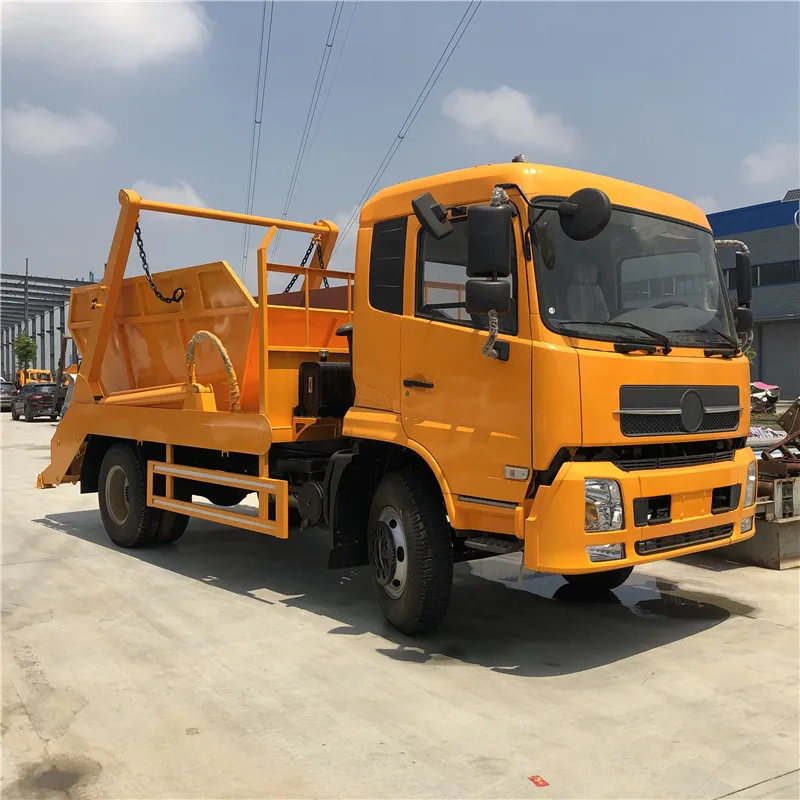
- Matching Truck Size to Haul Distance: Deploying small 6 m³ trucks on a 35 km highway haul to a regional landfill burns excessive diesel and wastes driver hours. Keep 6 m³ trucks strictly inside dense downtown wards and feed their loads into 16–20 m³ mobile compactor containers hauled by 6x4 hook lift trucks. Explore complete deployment ratios on our city sanitation fleet planning page.
- Separating Street Debris & Market Waste: Routing wet construction silt, market timber crates, and drain-cleaning sludge into dedicated skip loaders prevents catastrophic hydraulic blade failures across your residential compactor fleet—preserving that 85%+ mechanical availability benchmark.
Core Vehicle Building Blocks for a Balanced City Sanitation Fleet
Review the four core units from our refuse trucks lineup used to assemble phased municipal fleet tenders.
6 m³ Alley & Ward Feeder Compactor (4x2)
|
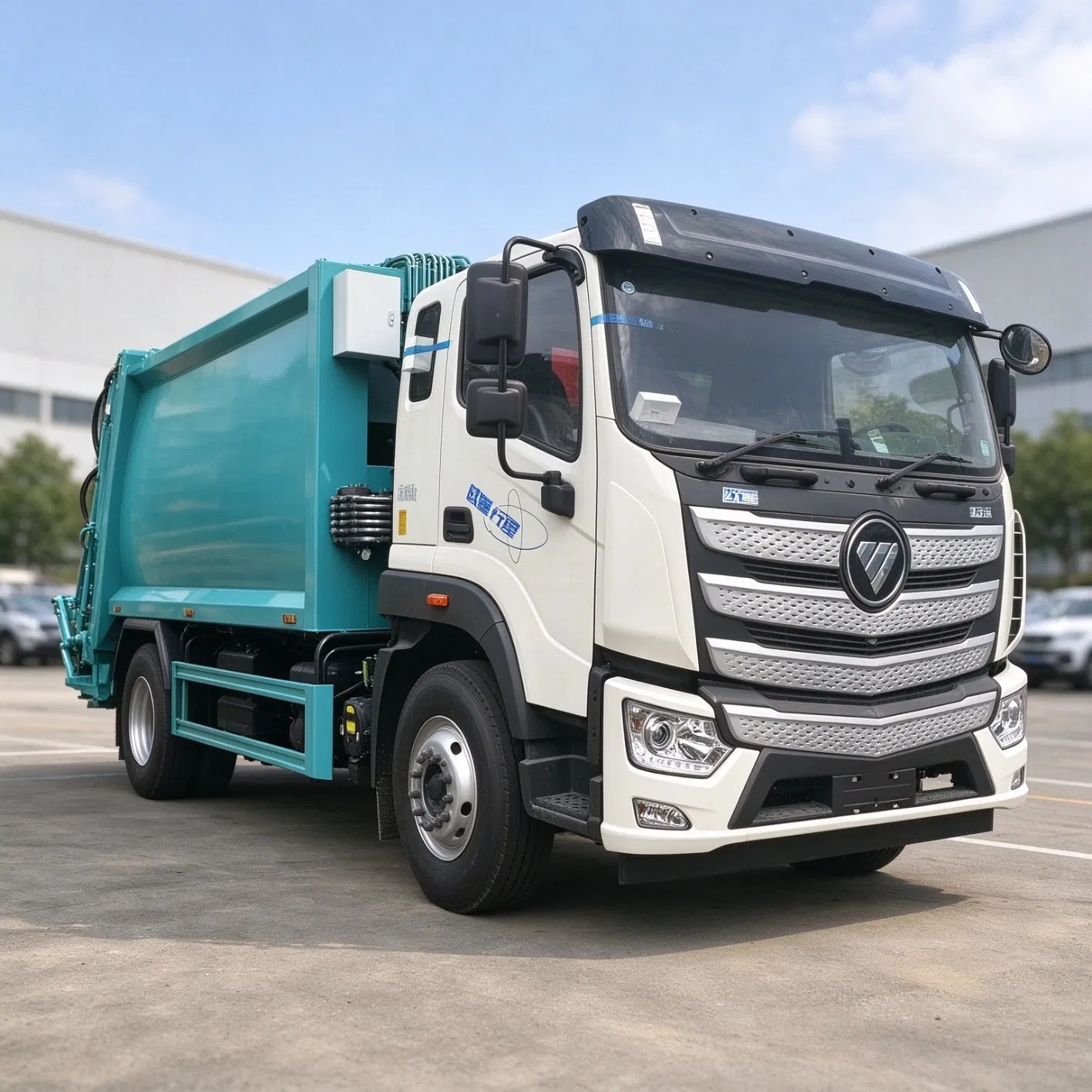
12 m³ Core Municipal Compactor (4x2 18T)
|
18 m³ Heavy Arterial Compactor (6x4 25T)
|
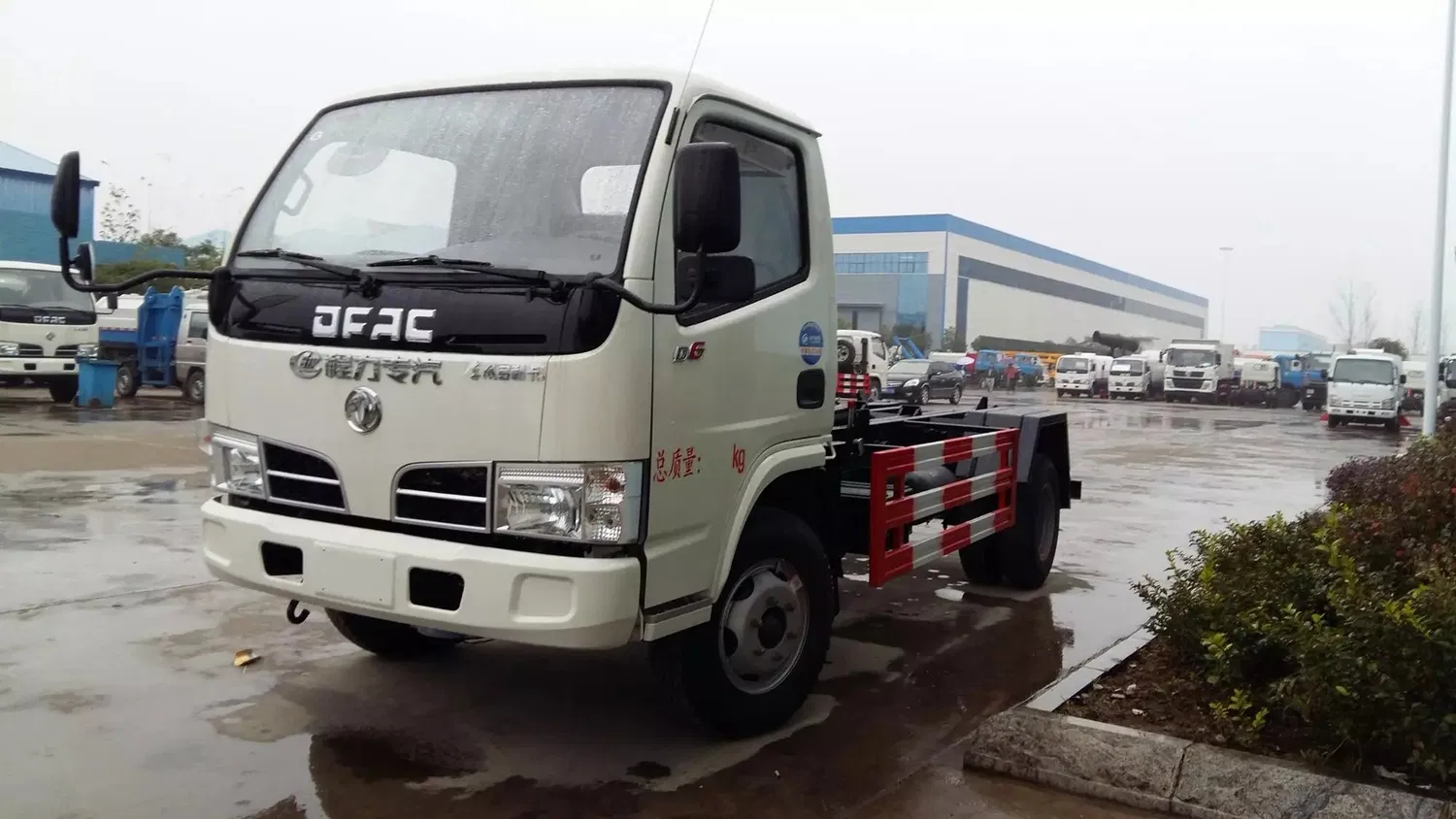
16–20 Ton Hook Lift + Transfer Containers (6x4)
|
Phased Tender Documentation, Fleet Training & Spares Pooling
Procuring a multi-vehicle sanitation fleet under a single standardized chassis platform simplifies driver licensing, workshop diagnostics, and spare-parts inventory across the municipality:
- Standardized Fleet Bid Documents: Tender-specific Manufacturer's Authorisation Form (MAF), Certificate of Origin (CO), unified fleet technical compliance matrix, hydraulic cycle and leachate-seal factory inspection certificates, and Pre-Shipment Inspection (SGS, Bureau Veritas, or Intertek) support for multi-unit Ro-Ro shipments.
- Safety & Engineering Alignment: Rear-loader emergency stops, interlock valves, and EN 840 bin-lifter interfaces are engineered in alignment with buyer-specified municipal safety clauses referencing EN 1501 functional guidelines upon request (formal third-party type-approval certificates are confirmed in writing only where explicitly contracted).
- Fleet-Wide Commissioning & Pooled 2-Year Spares: Rather than buying fragmented spare kits per truck, multi-unit city tenders achieve 15%–25% better maintenance coverage by bundling a centralized municipal depot 2-year spares pool (shared engine/hydraulic filters, cylinder seal kits, wear pads, high-pressure hoses, tailgate gaskets, and proximity switches) alongside structured 5- to 10-day on-site training for city drivers, route supervisors, and workshop mechanics.
Planning & Compliance Note: Last updated November 2026. All population-to-truck ratios above are illustrative planning models; final municipal fleet tenders should confirm local waste density, landfill turnaround time, and LHD/RHD road axle limits.
Frequently Asked Questions
1. How many garbage trucks does a city of 100,000 people need?
Using an illustrative generation rate of 0.65 kg/person/day (~65 metric tons/day), a city of 100,000 people needs roughly 4 to 5 active 12 m³ compactor trucks making two daily trips—plus 1 standby reserve unit and 1 dedicated skip loader for markets—totaling 6 to 7 garbage trucks for full daily coverage on a single shift.
2. Why should a municipal fleet budget include 15% to 20% extra standby trucks?
Refuse trucks operate in abrasive, corrosive conditions 6 to 7 days every week. Scheduled preventive servicing, hydraulic hose replacements, tire changes, and body washdowns typically keep 15% of any active sanitation fleet off the road at any given time. Without standby reserve vehicles, a single workshop breakdown causes missed routes and overflowing street bins.
3. How does landfill distance affect the number of garbage trucks a city needs?
Landfill distance directly controls trips per shift. If a landfill sits 10 km away, one truck completes 2 to 3 daily trips; if urban expansion pushes the landfill 35 km away through heavy traffic, each truck may complete only 1 trip per shift—requiring either double the compactor fleet, double-shift night collection, or hook lift transfer stations using 18–20 m³ bulk containers.
4. Should a municipality buy all the same size garbage trucks or a mixed fleet?
A mixed fleet built on standardized chassis brands outperforms single-size fleets. Pairing compact 4–6 m³ trucks (for tight downtown lanes), 12–18 m³ compactors (for main avenues), and skip loaders or hook lifts (for markets and heavy debris) prevents oversized trucks from blocking alleys and keeps demolition rubble out of compactor hoppers.
5. Can you help calculate a custom fleet plan for our city's sanitation tender?
Yes. Share your city's population, estimated daily waste tonnage (or per-capita estimate), landfill round-trip distance, and road width constraints to receive an illustrative fleet-mix sizing sheet, dimensional GA drawings, and phased FOB/CIF budget estimates.
Download Fleet Sizing Worksheet or Request Municipal Fleet Proposal
Request Tender Technical Schedule & Bid Support
Share your target vehicle capacity, steering side (LHD/RHD), destination port and tender timeline to receive model technical schedules, dimensional drawings and clause-by-clause bid support.
Request Bid Quotation & Technical Schedule | Review Tender Documents We Provide
Vehicle models to compare
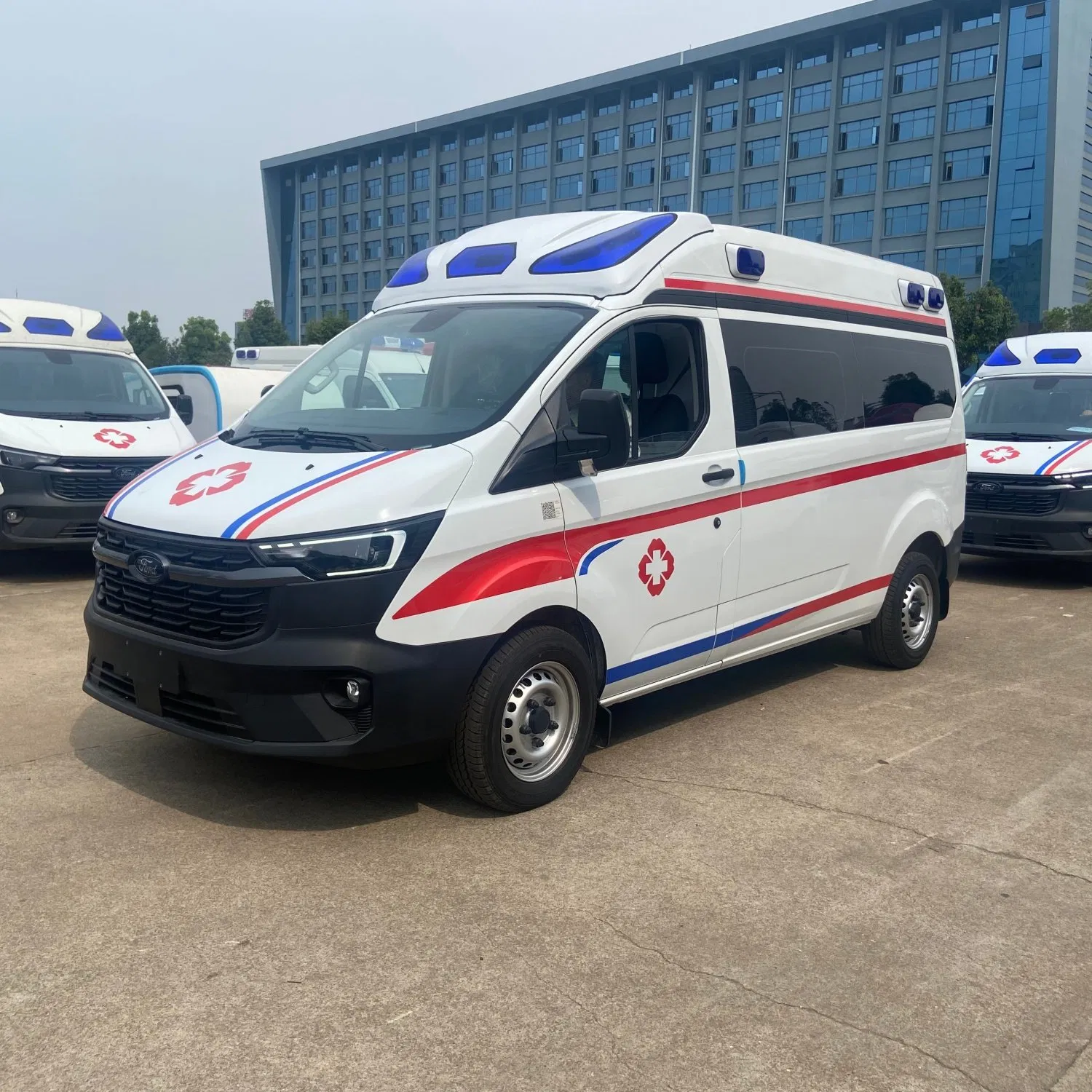
Patient Transport Ambulance CLW5030XJHCDP
The CLW5030XJHCDP is a patient transport ambulance built by Chengli Automobile Group for ministries of health, public hospitals and humanitarian NGOs. Its manufacturer record lists a 3,300 kg GVW class and 162 kW engine output. Right-hand-drive availability, final equipment fit-out and export documentation are confirmed per contract for government and donor-funded tenders.
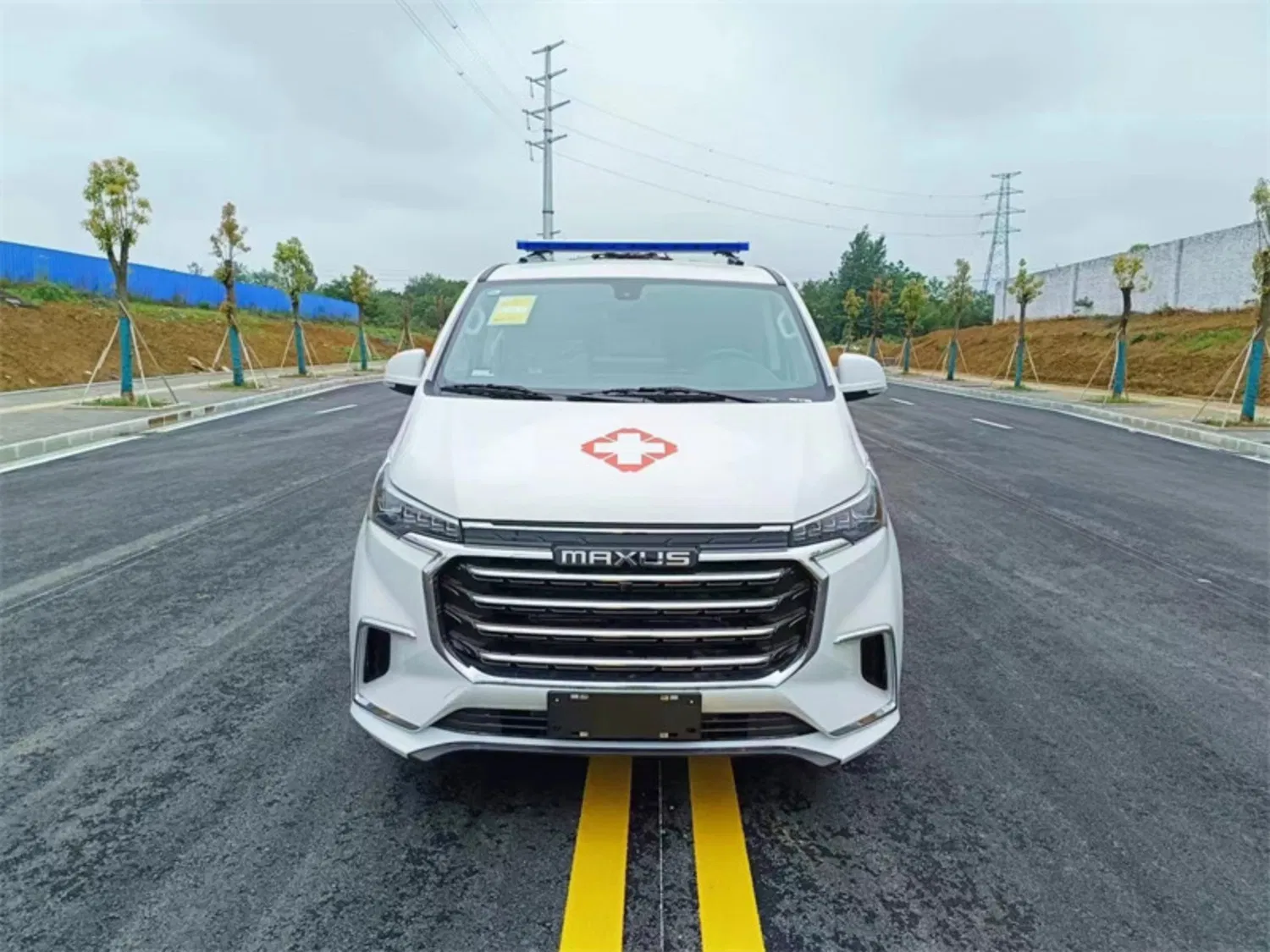
Patient Transport Ambulance CL5030XJH6AYS
The CL5030XJH6AYS is a 4x2 patient transport ambulance built by Chengli Automobile Group for ministries of health, public hospitals and humanitarian NGOs. Its manufacturer record lists a 2,900 kg GVW class and 186.4 kW engine output. Right-hand-drive availability, final equipment fit-out and export documentation are confirmed per contract for government and donor-funded tenders.
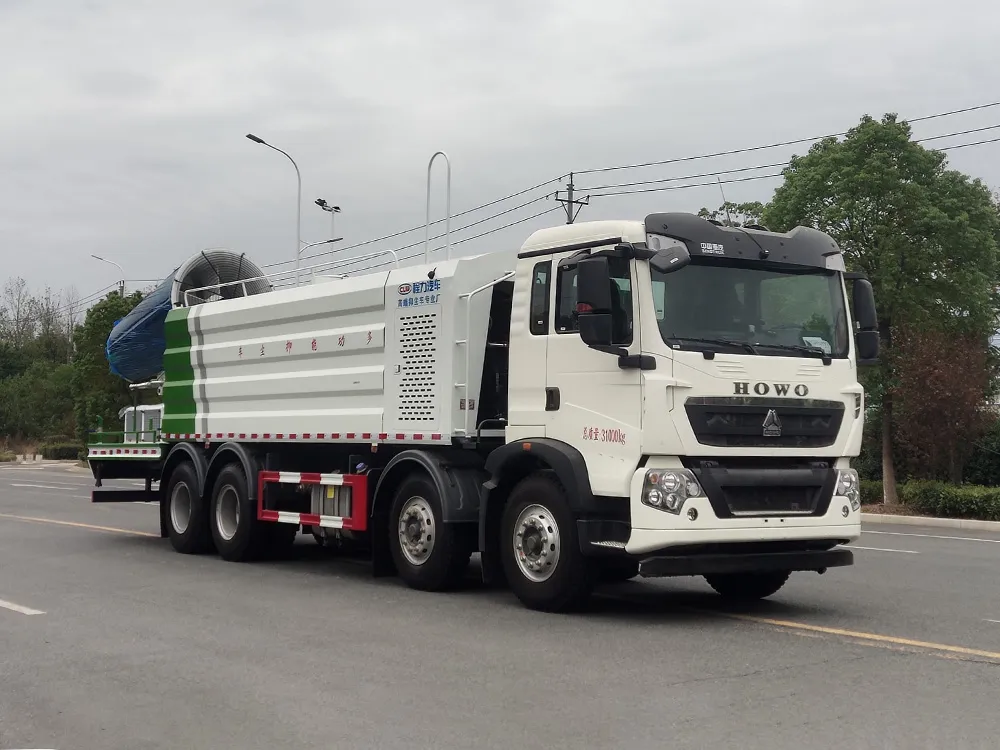
Dust Suppression Truck CL5310TDYZ6YC
The CL5310TDYZ6YC is a 8x4 Sinotruk-chassis dust suppression truck built by Chengli Automobile Group for city councils, municipal sanitation departments and public-works contractors. Its manufacturer record lists a 21 m³ key specification, a 31,000 kg GVW class and 257 kW engine output. Right-hand-drive availability, final equipment fit-out and export documentation are confirmed per contract for government and donor-funded tenders.
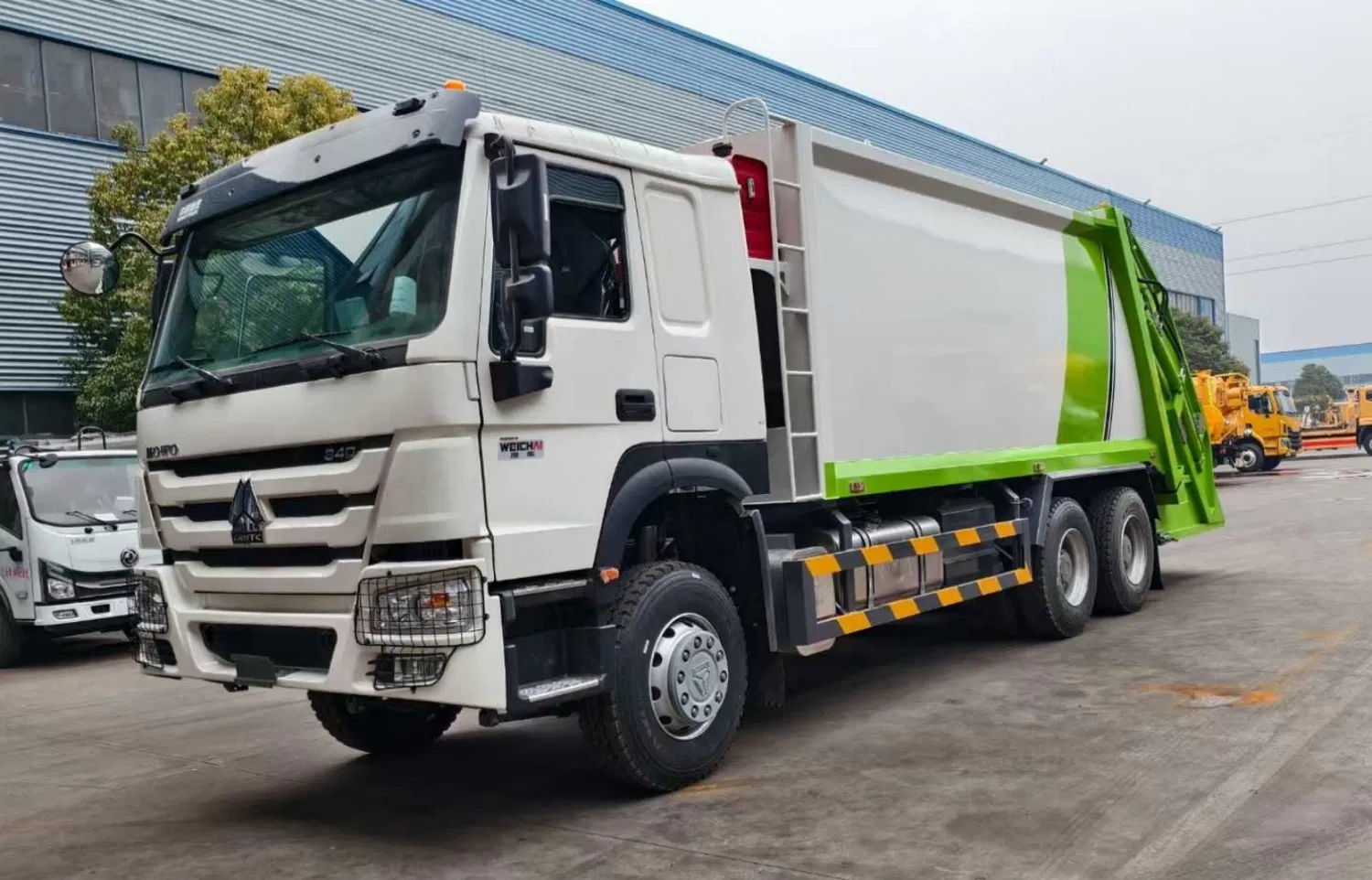
Refuse Compactor CLW5250ZYSAHJ
The CLW5250ZYSAHJ is a 6x4 refuse compactor built by Chengli Automobile Group for city councils, municipal sanitation departments and public-works contractors. Its manufacturer record lists a 20–23 m³ key specification and a 25,000 kg GVW class. Right-hand-drive availability, final equipment fit-out and export documentation are confirmed per contract for government and donor-funded tenders.
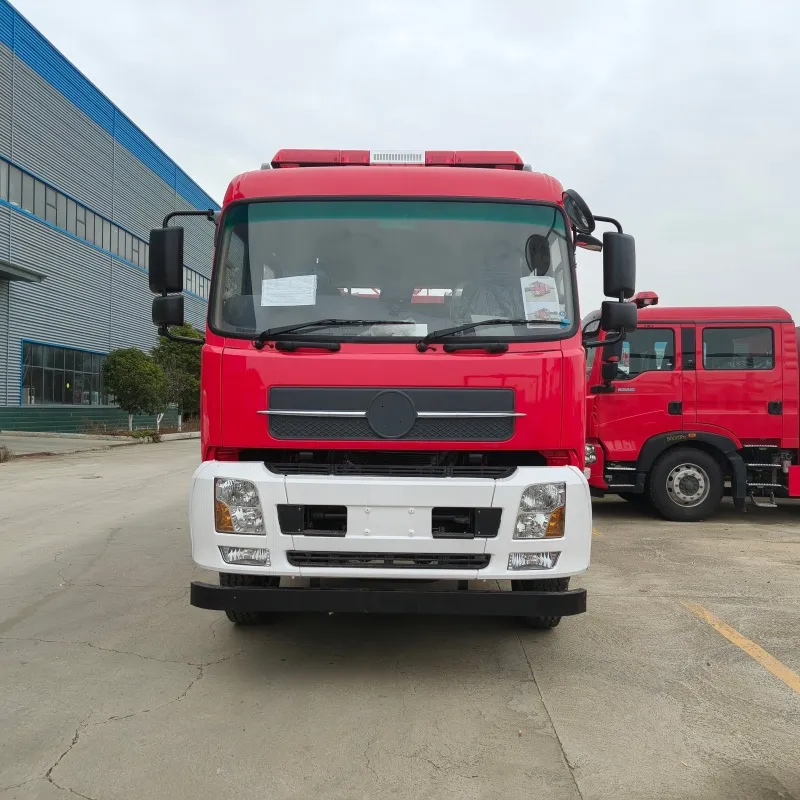
Foam Fire Truck CLW5190GXFPM50
The CLW5190GXFPM50 is a 4x2 foam fire truck built by Chengli Automobile Group for municipal fire brigades, civil defence agencies and industrial safety fleets. Its manufacturer record lists a 19,100 kg GVW class and 149.1 kW engine output. Right-hand-drive availability, final equipment fit-out and export documentation are confirmed per contract for government and donor-funded tenders.
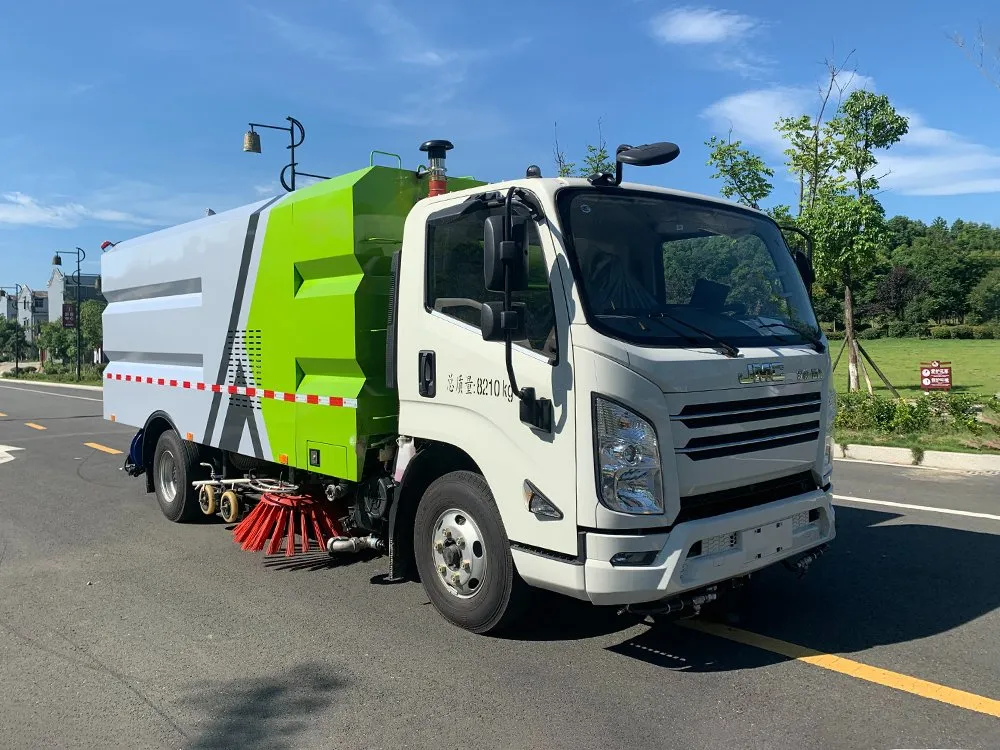
Washing-Sweeping Truck CLW5080TXSJ6
The CLW5080TXSJ6 is a 4x2 JMC-chassis washing-sweeping truck built by Chengli Automobile Group for city councils, municipal sanitation departments and public-works contractors. Its manufacturer record lists a 3 m cleaning width key specification, the JX1083TK26 chassis and a 8,210 kg GVW class. Right-hand-drive availability, final equipment fit-out and export documentation are confirmed per contract for government and donor-funded tenders.
TECHNICAL DOCUMENT REQUEST
Get the specification conversation started
Tell us your destination and vehicle requirement. PDF availability and the specification scope will be confirmed for the proposed model.